

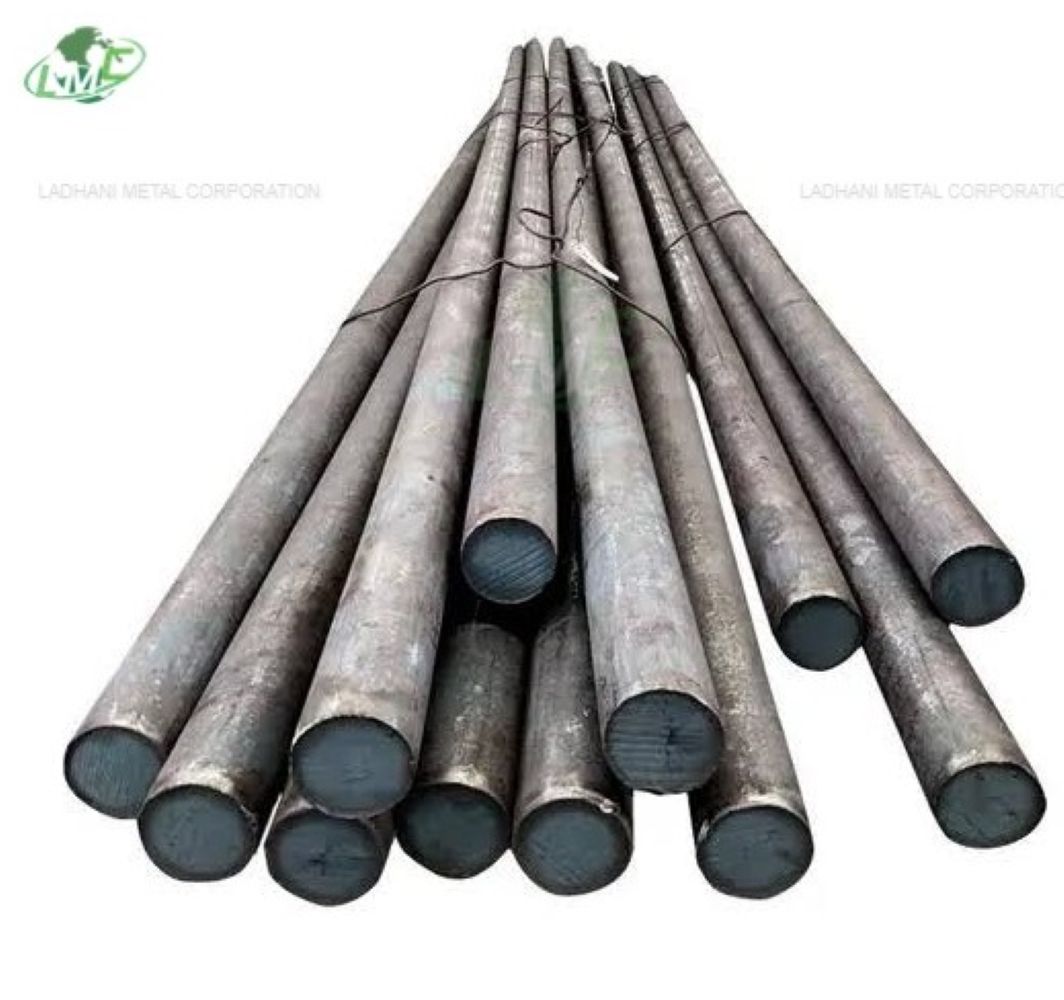
FOR REQUIREMENT OF THIS GRADE
OR FOR DETAIL CONTACT US AT :-
Introduction
EN 10277-3 was the former
European specification for bright steel bars made from free-cutting steels. It
covered bright bars supplied in drawn, turned/peeled or ground conditions for
mechanical and general engineering purposes. The 2008 edition was withdrawn in
2018 when EN 10277-1 to EN 10277-5 were consolidated into EN 10277:2018.
For current procurement, the
applicable requirements should be checked against the current successor
standard. The 2018 EN 10277 specification covers non-alloy free-cutting steels
among its material categories.
Ladhani Metal Corporation
supplies bright steel bars in required grades, dimensions, surface conditions
and delivery conditions for mechanical and engineering requirements.
Applicable Standard
EN 10277-3:2008 – Bright
Steel Products – Technical Delivery Conditions – Free-Cutting Steels.
This part was specifically
concerned with straight bright steel bars of free-cutting steels supplied in
drawn, turned or ground condition. BS EN 10277-3:2008 was withdrawn on 20 June
2018.
Material Type
EN 10277-3 covers non-alloy
free-cutting steels designed to provide good machinability during turning,
drilling, milling and other machining operations.
The principal alloying
additions responsible for machinability include manganese, sulphur and, for
leaded grades, lead.
Forms of Supply
- Bright Steel Bars
- Cold Drawn Bright Bars
- Peeled Bright Bars
- Turned Bright Bars
- Ground Bright Bars
- Free-Cutting Steel Bars
- Precision Bright Bars
- Round Bright Bars
- Hexagonal Bright Bars
- Square Bright Bars
- Flat Bright Bars
- Straight Length Bars
- Cut-to-Length Bars
The standard specifically
describes bright bars in drawn, peeled/turned or ground condition.
Grades Covered
11SMn30 | 11SMnPb30 | 11SMn37
| 11SMnPb37 | 10S20 | 10SPb20 | 15SMn13 | 35S20 | 35SPb20 | 46S20 | 46SPb20 |
38SMn28 | 38SMnPb28 | 44SMn28 | 44SMnPb28
The historical EN 10277-3
grade range included these free-cutting grades. The 2018 consolidated EN 10277
also added grades such as 9S20, 17SMn20, 35SMn20 and 35SMnPb20.
Chemical Composition
|
Steel Name |
C |
Si Max. |
Mn |
P Max. |
S |
Pb |
|
Steels not intended for heat treatment |
||||||
|
11SMn30 |
≤ 0.14 |
0.05 |
0.90–1.30 |
0.11 |
0.27–0.33 |
– |
|
11SMnPb30 |
≤ 0.14 |
0.05 |
0.90–1.30 |
0.11 |
0.27–0.33 |
0.20–0.35 |
|
11SMn37 |
≤ 0.14 |
0.05 |
1.00–1.50 |
0.11 |
0.34–0.40 |
– |
|
11SMnPb37 |
≤ 0.14 |
0.05 |
1.00–1.50 |
0.11 |
0.34–0.40 |
0.20–0.35 |
|
Case-hardening steels |
||||||
|
10S20 |
0.07–0.13 |
0.40 |
0.70–1.10 |
0.06 |
0.15–0.25 |
– |
|
10SPb20 |
0.07–0.13 |
0.40 |
0.70–1.10 |
0.06 |
0.15–0.25 |
0.20–0.35 |
|
15SMn13 |
0.12–0.18 |
0.40 |
0.90–1.30 |
0.06 |
0.08–0.18 |
– |
|
Direct-hardening steels |
||||||
|
35S20 |
0.32–0.39 |
0.40 |
0.70–1.10 |
0.06 |
0.15–0.25 |
– |
|
35SPb20 |
0.32–0.39 |
0.40 |
0.70–1.10 |
0.06 |
0.15–0.25 |
0.15–0.35 |
|
36SMn14 |
0.32–0.39 |
0.40 |
1.30–1.70 |
0.06 |
0.10–0.18 |
– |
|
36SMnPb14 |
0.32–0.39 |
0.40 |
1.30–1.70 |
0.06 |
0.10–0.18 |
0.15–0.35 |
|
38SMn28 |
0.35–0.40 |
0.40 |
1.20–1.50 |
0.06 |
0.24–0.33 |
– |
|
38SMnPb28 |
0.35–0.40 |
0.40 |
1.20–1.50 |
0.06 |
0.24–0.33 |
0.15–0.35 |
|
44SMn28 |
0.40–0.48 |
0.40 |
1.30–1.70 |
0.06 |
0.24–0.33 |
– |
|
44SMnPb28 |
0.40–0.48 |
0.40 |
1.30–1.70 |
0.06 |
0.24–0.33 |
0.15–0.35 |
|
46S20 |
0.42–0.50 |
0.40 |
0.70–1.10 |
0.06 |
0.15–0.25 |
– |
|
46SPb20 |
0.42–0.50 |
0.40 |
0.70–1.10 |
0.06 |
0.15–0.25 |
0.15–0.35 |
Notes:
- Elements
not quoted in the table shall not be intentionally added to the steel
without the agreement of the purchaser, except for the purpose of
finishing the heat. Elements such as Te, Bi, etc., may be added by the
manufacturer to improve machinability if agreed at the time of enquiry and
order.
- If, by
metallurgical techniques, the formation of special oxides is guaranteed, a
Si content of 0.10–0.40%
can be agreed.
The chemical values above
reflect the grade designations and composition tables associated with the EN
10277 free-cutting steel group; the exact product analysis and permissible
deviations should be checked against the applicable edition.
Mechanical Properties
Mechanical properties depend
on the grade, bar diameter and delivery condition. Bright steel products under
the EN 10277 system specify mechanical characteristics for products up to 100
mm in thickness; requirements for larger dimensions can be agreed between
purchaser and manufacturer.
Typical properties include:
- Tensile Strength: Grade and
diameter dependent
- Yield/Proof Strength: Grade and
delivery-condition dependent
- Elongation: Grade and diameter
dependent
- Hardness: Depending on grade and
supply condition
- Machinability: Enhanced through
controlled sulphur and other additions
Surface Condition
Bright steel differs from
conventional hot-rolled black bar because its surface is further processed to
improve dimensional accuracy and surface quality.
Available surface conditions
include:
- Cold Drawn
- Peeled
- Turned
- Ground
- Bright Finished
- Precision Ground
BSI describes bright steel as
steel whose surface condition has been improved by processes such as drawing,
peeling or grinding over the hot-rolled mill finish.
Dimensional Accuracy
Bright steel bars offer
improved dimensional control compared with conventional hot-rolled bars.
- Close Diameter Tolerances
- Improved Straightness
- Controlled Surface Roughness
- Better Roundness
- Consistent Cross-Section
- Precision Lengths
The 2018 consolidated EN
10277 added dimensional requirements to the standard.
Key Features
- Excellent machinability
- Improved surface finish
- Good dimensional accuracy
- Good straightness
- Suitable for automatic machining
- Available in leaded and non-leaded
grades
- Suitable for high-volume component
manufacturing
- Available in drawn, peeled/turned
and ground conditions
Applications
Automotive Components
- Shafts
- Bushes
- Pins
- Axles
- Fasteners
- Machined automotive components
General Engineering
- Machine components
- Precision parts
- Rollers
- Spindles
- Sleeves
- Couplings
Automatic Machining
- CNC-machined components
- Screw-machine components
- Turned parts
- Precision fittings
- Small mechanical components
Fastener Manufacturing
- Bolts
- Nuts
- Studs
- Screws
- Threaded components
Machining and Fabrication
The principal advantage of
free-cutting steel is its machinability. Controlled sulphur and, in leaded
grades, lead additions help produce short and easily managed machining chips
and reduce machining forces.
These steels are particularly
suitable for turning, drilling, milling and automatic machining operations.
Heat Treatment
Heat-treatment requirements
depend on the individual grade.
Some grades are primarily
intended for machining without subsequent heat treatment, while other
free-cutting grades can be used where additional heat-treatment operations are
required.
The appropriate treatment
should be selected according to the grade and final component requirements.
Testing and Inspection
EN 10277 bright steel
products may be inspected for:
- Chemical Composition
- Tensile Properties
- Hardness
- Dimensional Accuracy
- Straightness
- Surface Quality
- Non-Metallic Inclusions
- Decarburization
- Machinability-related requirements
- Marking and Traceability
BS EN 10277 addresses
manufacturing process, chemical composition, mechanical properties,
hardenability, machinability, inclusions, decarburization, dimensions,
tolerances, surface quality and inspection.
Advantages
- Excellent machinability
- High production efficiency
- Reduced machining time
- Consistent dimensions
- Smooth surface finish
- Suitable for automatic and CNC
machining
- Wide range of grades
- Available in multiple
cross-sectional shapes
- Suitable for precision engineering
components
Conclusion
EN 10277-3 bright steel
products were specified for free-cutting steel bars supplied in drawn,
peeled/turned or ground conditions. Grades such as 11SMn30, 11SMnPb30, 11SMn37,
11SMnPb37, 10S20, 10SPb20, 15SMn13, 35S20 and other free-cutting grades are
used where machinability and dimensional accuracy are important.
For current orders, EN
10277:2018 should be considered because the former EN 10277-3:2008 was
consolidated into the single EN 10277 standard.
Ladhani Metal Corporation
supplies bright steel bars in required grades, forms of supply, sizes, surface
conditions and delivery conditions. To place order or enquiry contact Ladhani
Metal Corporation.
#EN10277.3 #EN10277.3Steel #EN10277.3BrightSteel
#EN10277.3SteelBars #EN10277.3BrightBars #EN10277.3SteelSupplier
#EN10277.3Manufacturer #EN10277.3Exporter #EN10277.3BrightSteelSupplier
#EN10277.3BrightSteelManufacturer #EN10277.3BrightSteelExporter #BrightSteelBars
#BrightSteelBar #BrightBars #BrightSteel #BrightSteelSupplier
#BrightSteelManufacturer #BrightSteelExporter #ColdDrawnSteelBars
#ColdFinishedSteelBars #PrecisionSteelBars #FreeCuttingSteel
#FreeMachiningSteel #EngineeringSteelBars #SteelBarSupplier
#SteelBarManufacturer #SteelBarExporter #EuropeanSteelStandard #LadhaniMetals
#SteelBarSolutions #Mumbai #Delhi #Chennai #Kolkata #Bengaluru
#Hyderabad #Ahmedabad #Pune #Surat #Jaipur #Lucknow #Kanpur #Nagpur #Indore
#Srinagar #Aurangabad #Dhanbad #Amritsar #NaviMumbai #Allahabad #Ranchi #Howrah
#Jabalpur #Gwalior #Vijayawada #Jodhpur #Raipur #Kota #Guwahati #Chandigarh
#Solapur #Hubli #Mysuru #Tiruchirappalli #Bareilly
@Mumbai
@Delhi @Chennai @Kolkata @Hyderabad @Bengaluru
