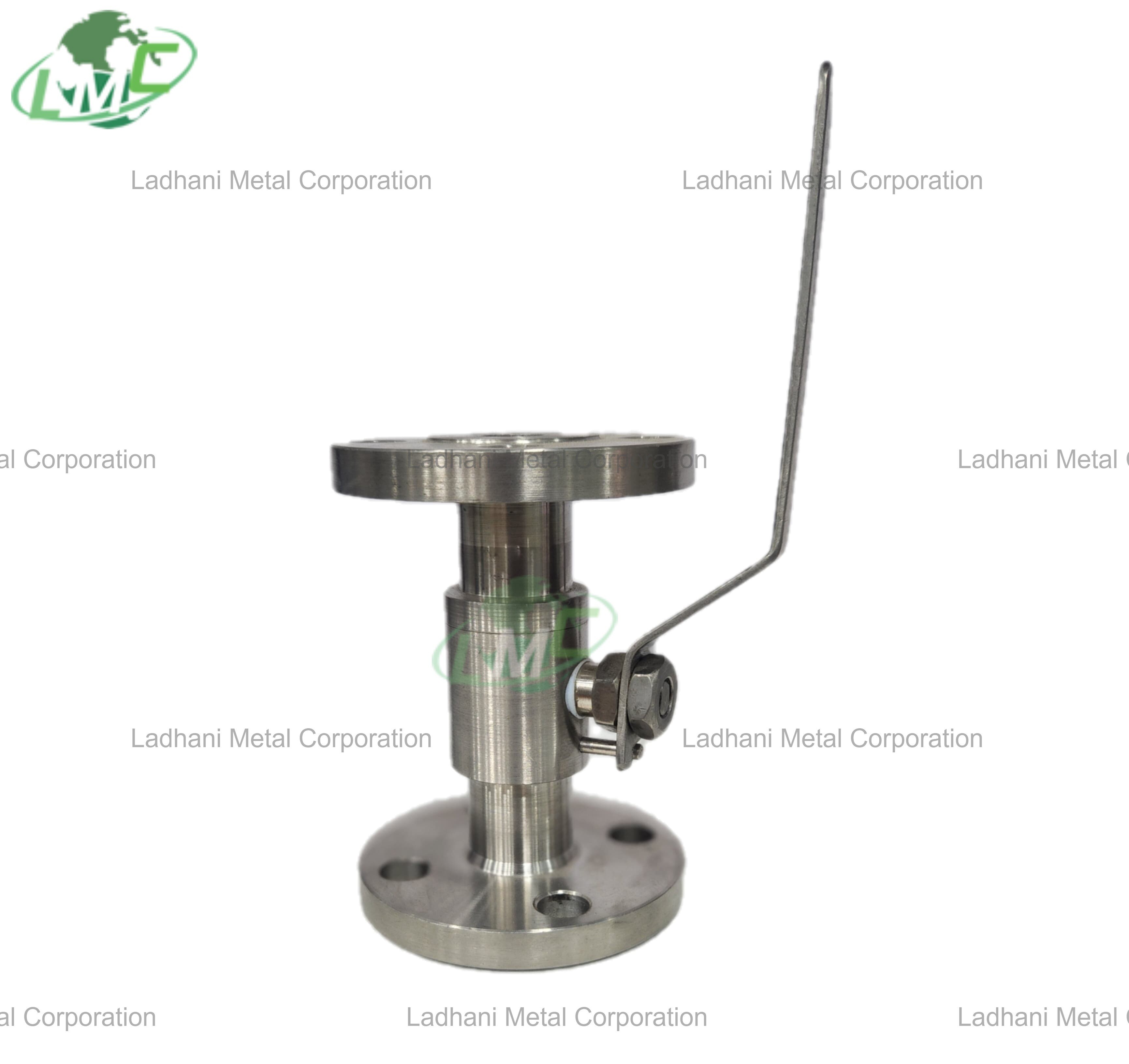

Titanium threaded ball valves are critical components in the gold and silver refining industry due to their outstanding mechanical and corrosion-resistant properties. In these industries, the refining process involves highly reactive and corrosive chemicals, such as acids (e.g., hydrochloric acid, nitric acid) and cyanide solutions, that can degrade standard valve materials. Titanium, with its excellent resistance to chemical attack, is often the material of choice for these challenging applications.
Chemical Composition of Titanium Used in Threaded Ball
Valves
Titanium
alloys, specifically Grade 2 (commercially pure titanium), are widely used in
ball valves for their corrosion resistance and strength. Below is the detailed
chemical composition of Titanium Grade 2 (Ti Gr. 2), which is typically used in
ball valves in industries like gold and silver refining:
- Titanium (Ti): Balance (≥ 99.2%)
- Iron (Fe): Max 0.30%
- Oxygen (O): Max 0.25%
- Nitrogen (N): Max 0.03%
- Hydrogen (H): Max 0.015%
- Carbon (C): Max 0.10%
Note: The low levels of iron and oxygen
contribute to high purity and excellent corrosion resistance.
These
compositions ensure the titanium ball valves can handle extreme conditions,
including exposure to sulfuric acid, hydrochloric acid, aqua regia (a mixture
of nitric acid and hydrochloric acid), and cyanide solutions used in the
refining of precious metals.
Mechanical Properties of Titanium Threaded Ball Valve
Titanium
ball valves are designed to maintain their mechanical strength even in harsh
environments. The mechanical properties of Titanium Grade 2, which is commonly
used in threaded ball valves, are as follows:
- Tensile Strength: 345 MPa (50 ksi)
- Yield Strength: 275 MPa (40 ksi)
- Elongation: 20% (in 50 mm gauge length)
- Hardness: 14.9 HRC
- Modulus of Elasticity: 103 GPa (15,000 ksi)
These
properties make titanium an ideal choice for ball valves in gold and silver
refining, where the system must withstand both mechanical stresses and the
harsh chemicals used in the refining processes.
Physical Properties of Titanium Threaded Ball Valve
- Density: 4.5 g/cm³
- Melting Point: 1,668°C (3,034°F)
- Thermal Conductivity: 21.9 W/m·K
- Electrical Conductivity: 0.37 x 10⁶ S/m
- Co-efficient of Thermal
Expansion: 8.6
µm/m·°C
The physical
properties of titanium, such as its high melting point and low thermal
expansion coefficient, make it a durable material for valves exposed to high
temperatures in refining processes.
Advantages of Titanium Threaded Ball Valves in Gold
and Silver Refining
- Corrosion Resistance: Titanium threaded ball valves
are highly resistant to the corrosive acids and chemicals involved in gold
and silver refining. For example, aqua regia and cyanide solutions can
degrade other metals like steel or brass, but titanium remains largely
unaffected.
- Durability: Titanium's exceptional
strength-to-weight ratio ensures that valves are lightweight yet strong
enough to handle high pressure in processing plants.
- Long Service Life: Titanium valves typically
require less maintenance and have a longer service life compared to valves
made from other materials like stainless steel, which may corrode or
degrade faster under harsh conditions.
- Non-reactivity: Titanium does not react with
precious metals such as gold and silver, ensuring that the refining
process remains unaffected by the valve material.
- High-Temperature Resistance: Gold and silver refining
processes often involve high-temperature solutions. Titanium’s ability to
withstand high temperatures makes it an excellent choice for these
applications.
Applications in Gold and Silver Refining
In gold and
silver refining, titanium threaded ball valves are used for controlling the
flow of various chemicals throughout the process. Key applications include:
- Aqua Regia Process: Aqua regia (a mixture of
hydrochloric and nitric acids) is used to dissolve gold and silver ores.
Titanium valves are resistant to the corrosive effects of this strong acid
mixture.
- Cyanide Leaching: Cyanide is widely used in the
extraction of gold from its ores. Titanium valves can handle cyanide
solutions without corroding, ensuring the safe and efficient flow of
chemicals during the leaching process.
- Electrorefining: In the electrorefining of gold
and silver, the solution can be acidic or alkaline. Titanium threaded ball
valves help control the flow of electrolyte solutions without degrading
over time.
- Solvent Extraction: Titanium valves are used in
solvent extraction operations, where the chemical solutions used to
separate gold and silver are highly reactive.
Summary
Titanium
threaded ball valves are an essential component in the gold and silver refining
industries due to their:
- Corrosion resistance to aggressive chemicals like
aqua regia, nitric acid, hydrochloric acid, and cyanide.
- Mechanical strength to handle high pressures and
temperatures without compromising performance.
- Longevity and reduced
maintenance
compared to other valve materials.
- Safe operation in highly corrosive
environments, preventing contamination of precious metals like gold and
silver.
Due to these
properties, titanium threaded ball valves from manufacturers such as Ladhani
Metal Corporation are invaluable for refining precious metals with efficiency
and safety.
product link :
https://www.ladhanimetal.in/products/threaded-ball-valve-in-titanium/137
https://www.indiamart.com/proddetail/titanium-flanged-ball-valve-for-gold-refining-unit-2855775156455.html?sellerpreview=1