

Introduction
Titanium
Clad Plates combine the exceptional corrosion resistance of titanium with the
strength and cost-effectiveness of carbon steel, stainless steel, or alloy
steel. By bonding a layer of titanium to a structural base metal, these plates
provide outstanding performance in highly corrosive and demanding environments
while significantly reducing material costs compared to solid titanium plates.
Titanium
Clad Plates are widely used in chemical processing, petrochemical plants,
offshore platforms, desalination facilities, power generation, pharmaceutical
manufacturing, marine engineering, and many other industries where durability
and corrosion resistance are essential.
What
are Titanium Clad Plates?
Titanium
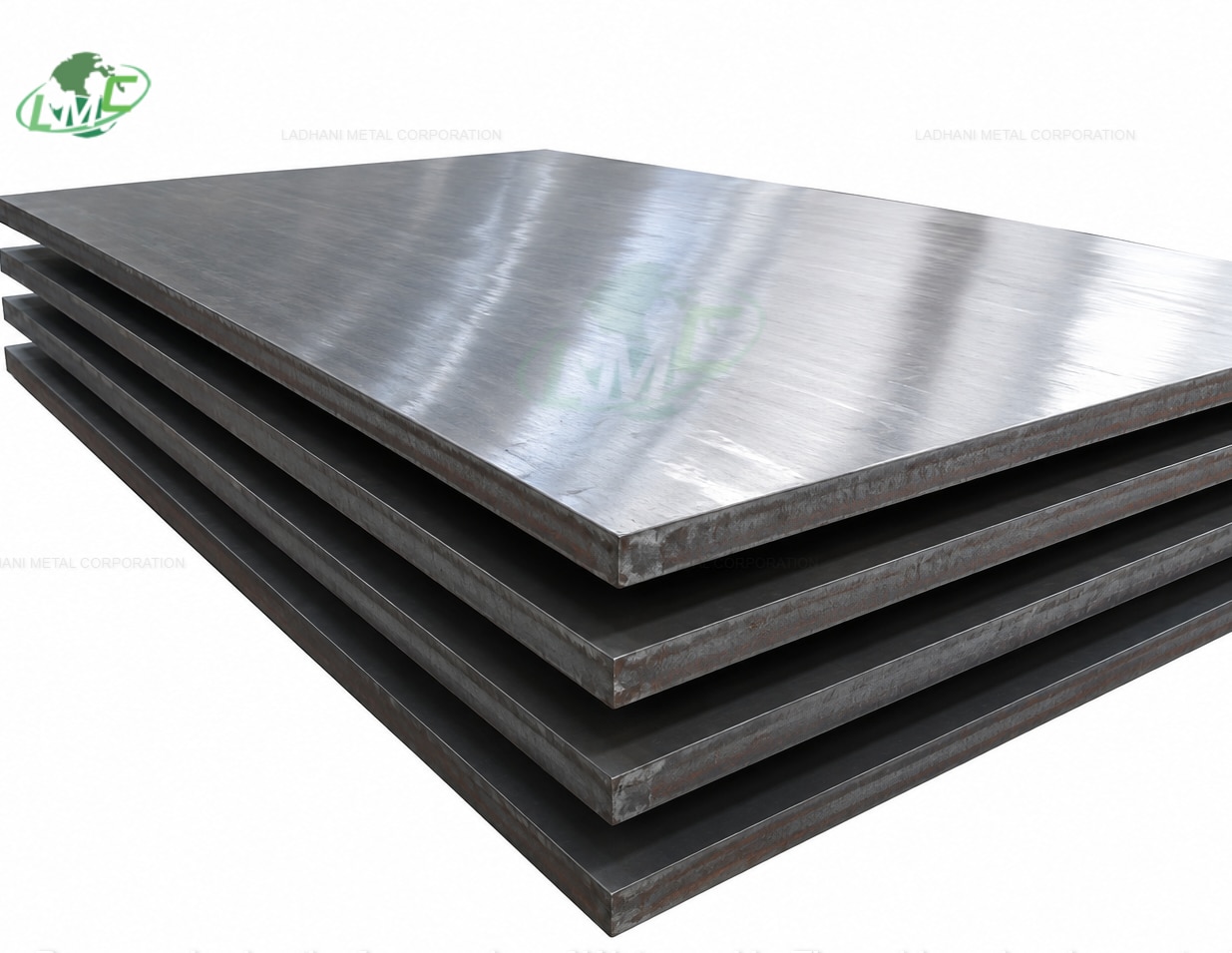
Clad Plates are composite metal plates consisting of a titanium layer
metallurgically bonded to a base metal such as carbon steel, stainless steel,
or alloy steel. The titanium layer acts as the corrosion-resistant surface,
while the backing material provides structural strength and load-bearing
capability.
This
combination offers the advantages of titanium without the high cost associated
with solid titanium products.
Composition
of Titanium Clad Plates
A
Titanium Clad Plate generally consists of two layers:
- Titanium
cladding layer
- Base
metal layer
The
titanium thickness varies depending on the application, while the base metal
thickness is selected based on structural requirements.
Base
Materials Used
Titanium
can be clad onto various base materials, including:
- Carbon
Steel
- Stainless
Steel
- Alloy
Steel
- Pressure
Vessel Steel
- Low
Alloy Steel
- High
Strength Steel
The
choice of base material depends on operating pressure, mechanical loads, and
service conditions.
Titanium
Grades Used for Cladding
Several
titanium grades are commonly used for clad plates, including:
- Grade
1
- Grade
2
- Grade
7
- Grade
11
- Grade
12
The appropriate grade is
selected based on corrosion resistance, mechanical strength, and the intended
application.
How
Titanium Clad Plates are Manufactured
Titanium
Clad Plates are produced using specialized bonding techniques that create a
permanent metallurgical bond between the titanium layer and the base metal.
Common
manufacturing methods include:
- Explosion
Bonding
- Roll
Bonding
- Explosion
Bonding followed by Hot Rolling
- Diffusion
Bonding
Each
method is selected according to the required plate dimensions, bond strength,
and service requirements.
Explosion
Bonding Process
Explosion
bonding uses controlled explosive energy to force the titanium and base metal together
at high velocity, creating a strong metallurgical bond without melting either
material.
This
process produces excellent bond integrity and is suitable for large plate
sizes.
Roll
Bonding Process
Roll
bonding joins titanium and the base metal by passing them through heavy rolling
mills under high temperature and pressure.
The
process creates uniform bonding over the entire plate surface and is commonly
used for large production volumes.
Key
Properties of Titanium Clad Plates
Titanium
Clad Plates offer numerous performance advantages, including:
- Outstanding
corrosion resistance
- High
mechanical strength
- Excellent
chemical resistance
- Superior
oxidation resistance
- Lightweight
titanium surface
- Excellent
weldability
- Long
service life
- High
bond strength
- Good
thermal stability
- Excellent
fatigue resistance
- Resistance
to seawater corrosion
- Reliable
performance in aggressive environments
Advantages
of Titanium Clad Plates
Titanium
Clad Plates provide several economic and technical benefits:
- Lower
cost than solid titanium plates
- Excellent
corrosion protection
- High
structural strength
- Reduced
maintenance costs
- Longer
equipment life
- Improved
process reliability
- Better
resistance to aggressive chemicals
- Excellent
durability
- High
pressure capability
- Reduced
lifecycle costs
- Suitable
for large equipment fabrication
- Easy
integration into pressure vessels and process equipment
Available
Forms and Dimensions
Titanium
Clad Plates are available in various configurations, including:
- Standard
plates
- Heavy
plates
- Custom-cut
plates
- Pressure
vessel plates
- Heat
exchanger plates
- Reactor
plates
- Large-size
fabricated plates
Thickness,
cladding ratio, width, and length can be customized according to project
specifications.
Applications
of Titanium Clad Plates
Titanium
Clad Plates are widely used across industries requiring corrosion-resistant
equipment.
Chemical Processing Industry
Used
in reactors, storage tanks, heat exchangers, pressure vessels, and process
equipment handling corrosive chemicals.
Petrochemical Industry
Suitable
for process vessels, separators, and equipment exposed to aggressive process
fluids.
Oil and Gas Industry
Used
in offshore platforms, production facilities, separators, and pressure
equipment operating in corrosive environments.
Power Generation
Applied
in condensers, heat exchangers, cooling systems, and pressure vessels.
Desalination Plants
Ideal
for seawater handling equipment due to titanium's exceptional resistance to
chloride corrosion.
Marine Industry
Used
in offshore structures, seawater piping systems, and marine processing equipment.
Pharmaceutical Industry
Suitable
for corrosion-resistant production equipment requiring clean and reliable
process surfaces.
Food Processing Industry
Used
where corrosion resistance and hygienic surfaces are required.
Pulp and Paper Industry
Applied
in bleaching systems and chemical recovery equipment.
Mining Industry
Used
in equipment exposed to abrasive and corrosive slurries.
Fabrication
Capabilities
Titanium
Clad Plates can be fabricated into various equipment, including:
- Pressure
vessels
- Heat
exchangers
- Reactors
- Storage
tanks
- Columns
- Towers
- Condensers
- Evaporators
- Tube
sheets
- Process
vessels
Proper
fabrication techniques help maintain bond integrity and ensure long-term
performance.
Quality
Testing
Titanium
Clad Plates undergo rigorous quality inspections, including:
- Ultrasonic
testing
- Bond
strength testing
- Shear
testing
- Bend
testing
- Tensile
testing
- Dimensional
inspection
- Visual
examination
- Chemical
composition verification
- Mechanical
property testing
- Surface
inspection
These
tests verify bond quality, material integrity, and compliance with applicable
standards.
Factors
to Consider When Selecting Titanium Clad Plates
Selecting
the right Titanium Clad Plate depends on several factors:
- Operating
temperature
- Corrosive
media
- Design
pressure
- Mechanical
loading
- Titanium
grade
- Base
metal selection
- Cladding
thickness
- Plate
dimensions
- Welding
requirements
- Applicable
design codes
Careful
selection ensures reliable performance and maximum service life.
Maintenance
and Service Life
Titanium
Clad Plates require minimal maintenance due to the excellent corrosion
resistance of titanium. Routine inspections should focus on welds, exposed
edges, and overall equipment condition to ensure long-term reliability.
With
proper fabrication, installation, and operation, Titanium Clad Plates can
provide decades of dependable service in demanding industrial environments.
Why
Titanium Clad Plates are Preferred
Industries
choose Titanium Clad Plates because they combine the corrosion resistance of
titanium with the mechanical strength and affordability of conventional
structural metals. This unique combination delivers reliable performance,
extends equipment life, minimizes maintenance, and offers substantial cost savings
compared to solid titanium construction.
Conclusion
Titanium Clad Plates are an efficient
and economical solution for applications requiring superior corrosion
resistance and structural strength. Their metallurgical bond, excellent
mechanical properties, and resistance to aggressive chemicals make them
indispensable in industries such as chemical processing, oil and gas, power
generation, marine engineering, and desalination. By combining the best
characteristics of titanium and structural metals, Titanium Clad Plates provide
long-lasting performance, enhanced reliability, and reduced lifecycle costs in
some of the world's most demanding operating environments.
#TitaniumCladPlate
#TitaniumCladSteel #TitaniumCladPlates #TitaniumCladding #TitaniumBondedPlate
#ExplosionBondedPlate #RollBondedPlate #TitaniumCompositePlate
#TitaniumPressureVesselPlate #TitaniumHeatExchangerPlate
#TitaniumCorrosionResistantPlate #TitaniumChemicalProcessing
#TitaniumPetrochemical #TitaniumPowerPlant #TitaniumMarineApplications
#TitaniumIndustrialPlate #TitaniumFabrication #TitaniumEngineering
#TitaniumMetalCladPlate #TitaniumSteelBondedPlate #TitaniumCladMaterial
#TitaniumPlateSupplier #TitaniumPlateManufacturer #TitaniumExporter #TitaniumStockist
#TitaniumDealer #TitaniumMechanicalProperties #TitaniumChemicalComposition
#TitaniumIndustrialApplications #TitaniumCladEquipment #ReactiveMetalCladPlate
#ASTMB898 #CladSteelPlate #BimetallicPlate #IndustrialTitaniumPlates #Mumbai
#Delhi #Chennai #Kolkata #Bengaluru #Hyderabad #Ahmedabad #Pune #Surat #Jaipur
#Lucknow #Kanpur #Nagpur #Indore #Srinagar #Aurangabad #Dhanbad #Amritsar
#NaviMumbai #Allahabad #Ranchi #Howrah #Jabalpur #Gwalior #Vijayawada #Jodhpur
#Raipur #Kota #Guwahati #Chandigarh #Solapur #Hubli #Mysuru #Tiruchirappalli
#Bareilly
@Mumbai
@Delhi @Chennai @Kolkata @Hyderabad @Bengaluru
