
Ladhani Metal Corporation is a leading manufacturer and supplier of
high-quality industrial valves, providing a diverse range of valve solutions to
meet the rigorous demands of various industries. One of the most sought-after
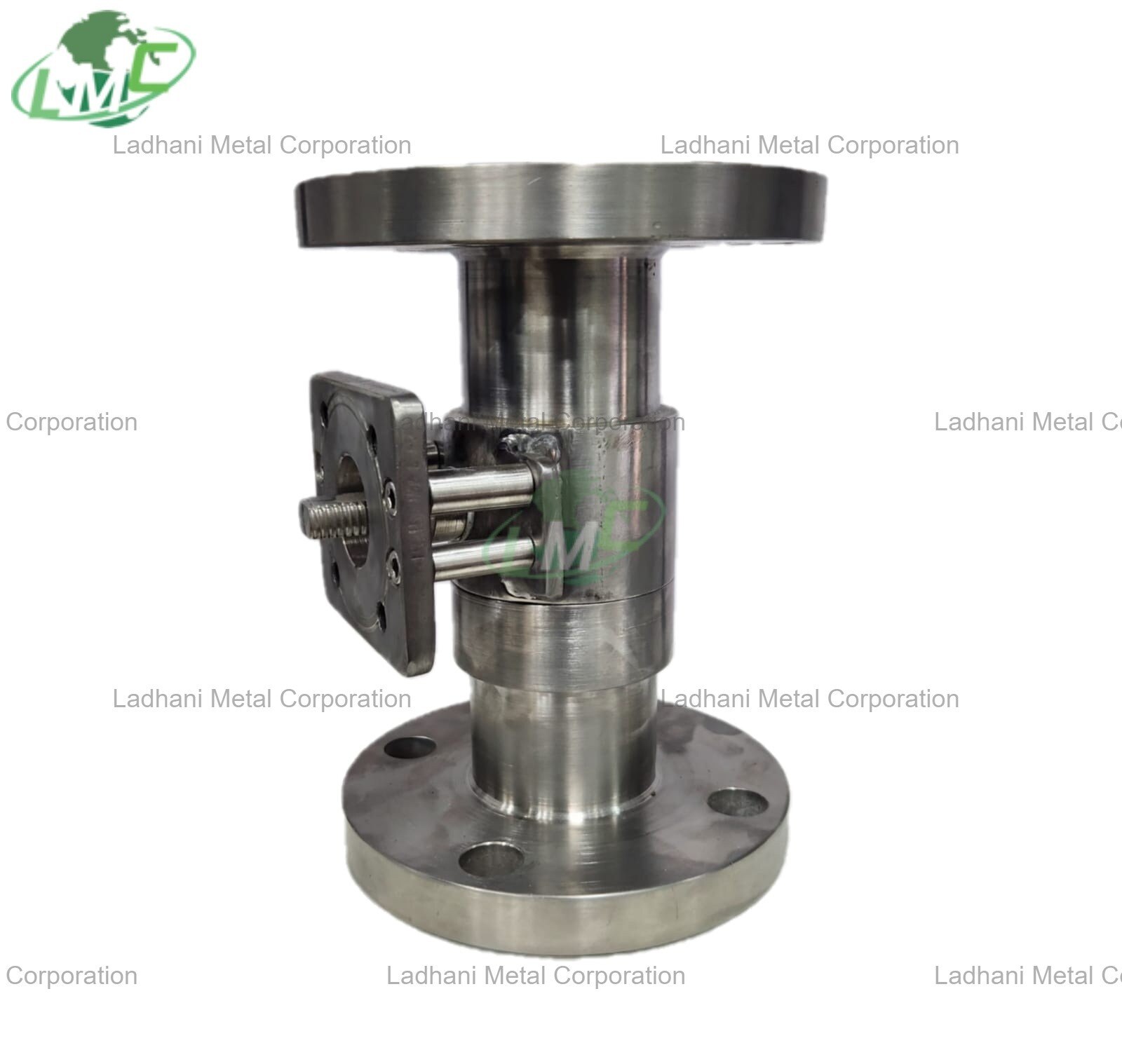
products in their extensive portfolio is the Flanged Titanium Ball Valve. This robust and
reliable valve has found wide application in sectors such as chemical
processing, oil and gas, water treatment, and aerospace due to its exceptional
durability, corrosion resistance, and high-performance characteristics.
In this article, we explore the features,
structure, and advantages of Flanged
Titanium Ball Valves offered by Ladhani Metal Corporation,
along with their chemical, mechanical, and physical composition.
What is a Flanged Titanium Ball Valve?
A Flanged
Titanium Ball Valve is a type of ball valve with flanged ends
that are bolted directly to the pipework. The body of the valve is made from
titanium, a lightweight yet strong metal known for its superior resistance to
corrosion and high-temperature tolerance. The ball valve utilizes a spherical
ball with a central hole, which, when rotated, either allows or blocks the flow
of fluids or gases.
Ladhani Metal Corporation manufactures these valves to the highest industry standards, ensuring precision, reliability, and long-lasting performance, making them ideal for demanding applications in industries that require effective flow control and minimal risk of leakage.
Structure of a Flanged Titanium Ball Valve
The Flanged
Titanium Ball Valve features a well-engineered structure
designed to withstand high pressures and harsh environments. The key components
that make up the valve’s structure include:
1.
Titanium
Body: The body of the valve is made from high-grade titanium,
ensuring excellent resistance to corrosion, especially in aggressive
environments such as seawater, acidic chemicals, and high-temperature
processes.
2.
Flanged
Ends: The valve body is designed with flanged ends, allowing
for easy and secure installation into piping systems. These flanges are
typically bolted to the pipework, creating a tight seal and minimizing the risk
of leaks. The flanged connection also facilitates quick replacement and
maintenance of the valve.
3.
Ball
Mechanism: The ball inside the valve has a hole (bore) through
its center. When the valve handle is turned, the ball rotates, aligning the
hole with the pipe for an open flow or blocking the flow when the solid side of
the ball faces the pipe. The spherical ball mechanism offers smooth and precise
control over the fluid or gas passing through.
4.
Stem:
The stem connects the valve handle to the ball, allowing operators to open or
close the valve. The stem is designed to handle high torque and ensure smooth
rotation without leakage.
5.
Seats:
The valve includes seat rings made of durable materials such as PTFE
(Polytetrafluoroethylene), which provide a tight seal around the ball. These
seats are crucial in preventing leaks when the valve is closed and ensuring
smooth operation.
6.
Handle:
The handle is used to manually operate the valve. It is designed to be
ergonomic and easy to turn, even under high pressures. In larger sizes,
automated or actuated handles can be used for more efficient operation.
7.
Gasket:
Gaskets are placed between the flanged connections to further ensure a
leak-proof seal and prevent fluid or gas leakage at the junctions.
The combination of these components results in a Flanged Titanium Ball Valve that is durable, corrosion-resistant, and able to handle high-pressure and high-temperature conditions.
Mechanical and Physical Composition of
Flanged Titanium Ball Valves
The mechanical and physical properties of
titanium, as used in Flanged
Titanium Ball Valves from Ladhani Metal Corporation, are key to
their exceptional performance and durability in various industrial
applications.
Chemical Composition
Titanium, used in the construction of these
ball valves, primarily consists of the following elements:
·
Grade
2 Titanium (CP Ti):
- Titanium (Ti): 99.2%
- Iron (Fe): ≤0.3%
- Oxygen (O): ≤0.18%
- Carbon (C): ≤0.08%
- Nitrogen (N): ≤0.05%
- Hydrogen (H): ≤0.015%
·
Grade
5 Titanium (Ti-6Al-4V) (often used in more demanding
applications):
- Titanium (Ti): 90.0% (min)
- Aluminum (Al): 6.0%
- Vanadium (V): 4.0%
- Iron (Fe): ≤0.25%
- Oxygen (O): ≤0.20%
- Carbon (C): ≤0.08%
Titanium’s high purity and corrosion
resistance make it ideal for aggressive environments where other metals may
fail.
Mechanical Properties
The mechanical properties of Flanged Titanium Ball Valves
from Ladhani Metal Corporation include high strength, low weight, and excellent
resistance to deformation under stress. These properties are essential for
ensuring the reliability of the valve in high-pressure and high-temperature
applications. The mechanical characteristics include:
·
Tensile
Strength:
- Grade 2 Titanium: Approx. 345 MPa (50 ksi)
- Grade 5 Titanium (Ti-6Al-4V): Approx. 895 MPa (130 ksi)
·
Yield
Strength:
- Grade 2 Titanium: Approx. 275 MPa (40 ksi)
- Grade 5 Titanium (Ti-6Al-4V): Approx. 828 MPa (120 ksi)
·
Hardness:
- Grade 2 Titanium: Vickers hardness (Hv) of approx. 140-160
- Grade 5 Titanium (Ti-6Al-4V): Vickers hardness (Hv) of approx. 330-400
·
Modulus
of Elasticity:
- Grade 2 Titanium: Approx. 110 GPa (16,000 ksi)
- Grade 5 Titanium (Ti-6Al-4V): Approx. 113 GPa (16,400 ksi)
These mechanical properties ensure that Flanged Titanium Ball Valves
can withstand high operational pressures and remain durable over extended
periods, reducing maintenance costs and improving operational efficiency.
Physical Properties
The physical properties of titanium, used in
Ladhani Metal Corporation’s Flanged
Titanium Ball Valves, contribute to their performance in
various conditions:
- Density:
- Grade 2 Titanium: Approx. 4.51 g/cm³
- Grade 5 Titanium (Ti-6Al-4V): Approx. 4.43 g/cm³
Titanium’s relatively low density compared to
stainless steel means that the valve is lightweight without compromising
strength or performance.
- Melting Point:
- Grade 2 Titanium: Approx. 1,668°C (3,034°F)
- Grade 5 Titanium (Ti-6Al-4V): Approx. 1,660°C (3,020°F)
This high melting point makes titanium ideal
for high-temperature environments, such as steam systems or processes requiring
elevated temperatures.
·
Coefficient
of Thermal Expansion:
- Titanium’s low thermal
expansion rate (approx. 8.6 x 10⁻⁶ /°C) ensures
that the valve maintains its shape and functionality even under
fluctuating temperatures.
·
Electrical
Conductivity:
- Titanium is a poor
conductor of electricity, making it ideal for
applications requiring electrical insulation.
·
Magnetic
Properties:
- Titanium is non-magnetic, which is important in environments where magnetic interference needs to be minimized.
Applications of Flanged Titanium Ball Valves
by Ladhani Metal Corporation
Flanged Titanium Ball Valves from Ladhani Metal Corporation
are widely used in various industries, including:
- Chemical Processing: Due to titanium's resistance to corrosive chemicals and
acids.
- Oil and Gas: For use in offshore platforms and pipelines exposed to
seawater.
- Aerospace:
Where lightweight and high-strength materials are crucial.
- Water Treatment: In aggressive environments requiring corrosion resistance.
- Marine Applications: For valves that can withstand harsh marine environments.
Conclusion
Ladhani Metal Corporation’s Flanged Titanium Ball Valves are engineered to deliver outstanding performance, longevity, and reliability. Their superior corrosion resistance, high mechanical strength, and lightweight properties make them the ideal choice for industries that demand efficient flow control in challenging environments. The chemical, mechanical, and physical properties of titanium ensure that these valves can perform under extreme conditions, providing excellent value and performance across a wide range of applications.
product link :
https://www.indiamart.com/proddetail/titanium-flanged-valve-2855764049933.html?sellerpreview=1
https://www.ladhanimetal.in/products/titanium-flanged-ball-valve-for-gold-refining-unit/139