
Ladhani
Metal Corporation: A Detailed Overview of DIN 94 Split Pins
Ladhani
Metal Corporation is a renowned manufacturer and supplier specializing in
high-quality metal components, particularly fasteners and industrial hardware.
Among their various offerings, DIN 94 split pins (also known as cotter pins)
are one of the most sought-after products for a wide range of industries. The
company’s commitment to excellence has made them a trusted name in the global fastener
market.
What Are DIN 94 Split Pins?
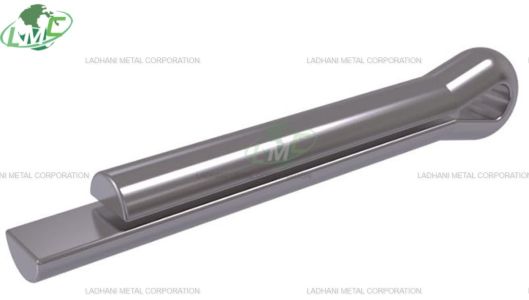
DIN 94 split
pins, or cotter pins, are a type of fastener used to secure or lock components
in place. They are commonly used in mechanical assemblies where parts need to
stay fixed and be resistant to loosening due to vibrations or movement. The
"DIN" in DIN 94 refers to the German Institute for Standardization
(Deutsches Institut für Normung), which has set the standard for split pins,
ensuring that these fasteners adhere to stringent dimensional and material guidelines.
Characteristics and Design of DIN 94 Split Pins
Design and
Shape:
- Split pins are made of a
straight pin with a split in the center, which allows the two legs to be
bent around a securing component (such as a bolt or nut) to hold it in
place.
- The legs are bent after
insertion to lock the pin in position, ensuring that the fastener will not
come undone under vibration or load.
Dimensions
and Sizes:
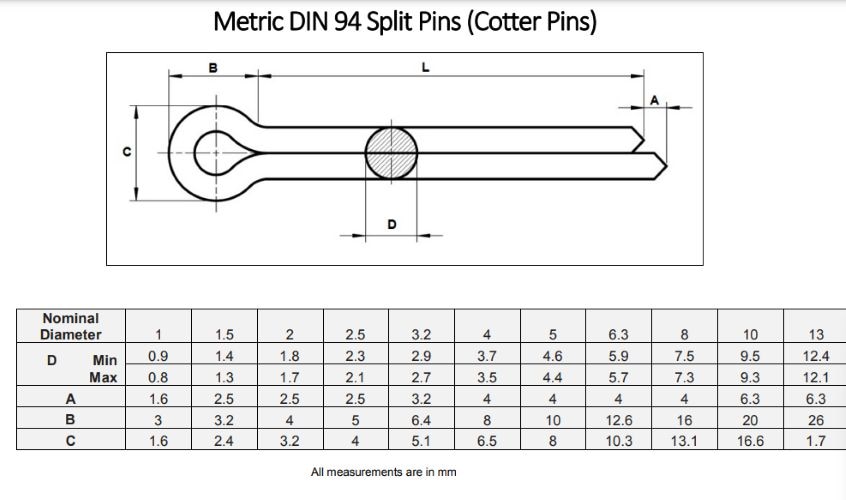
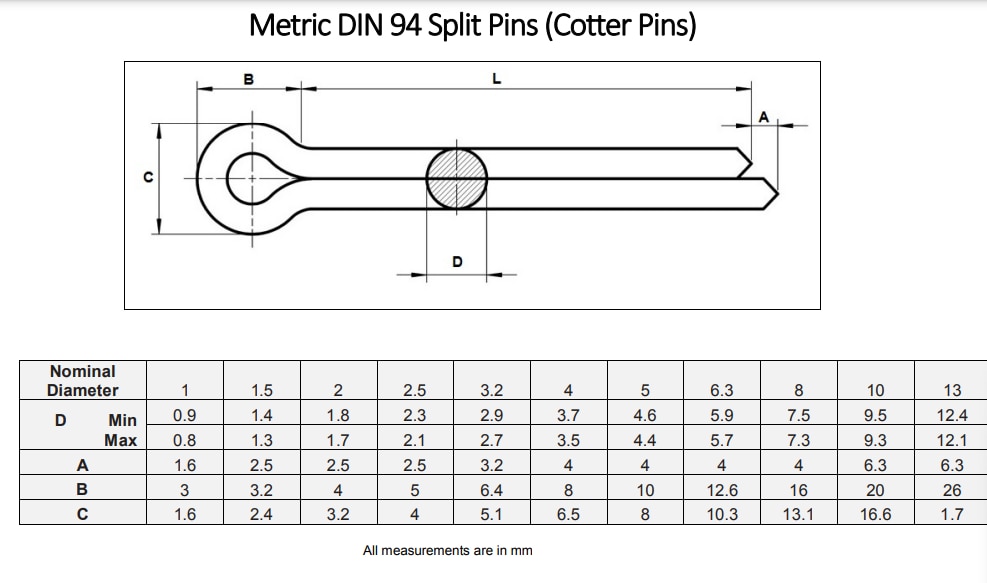
- DIN 94 split pins come in a
variety of sizes, with diameters ranging from 1.5 mm to 25 mm and lengths ranging
from 15 mm to 100 mm. This variety ensures compatibility with a wide range
of applications, from small precision machinery to heavy industrial
equipment.
- The pins typically have a
length that is approximately 1.5 to 2 times the diameter, which makes them
easy to bend and secure.
Materials: Ladhani Metal Corporation
manufactures DIN 94 split pins in various materials to suit different
environmental conditions. The most commonly used materials are:
- Titanium Grades 1, 2, and 5: Titanium is a lightweight and
strong material known for its excellent corrosion resistance, especially
in demanding environments.
- Stainless Steel (A2 and A4
grades): This
material is highly resistant to corrosion, making it ideal for
applications in harsh environments or where the pin may be exposed to
moisture, chemicals, or high temperatures.
- Brass: Brass split pins are available
for specific applications where non-corrosive, non-magnetic properties are
required.
Technical Chemical Composition
The chemical
composition of the materials used in Ladhani Metal Corporation's DIN 94 split
pins is crucial for ensuring their durability, corrosion resistance, and
overall performance in demanding applications.
- Stainless Steel (A2 Grade –
304)
- Chromium (Cr): 18%
- Nickel (Ni): 8%
- Manganese (Mn): 2%
- Silicon (Si): 1%
- Carbon (C): ≤0.07%
- Phosphorus (P): ≤0.045%
- Sulfur (S): ≤0.03%
- Stainless Steel (A4 Grade –
316)
- Chromium (Cr): 16-18%
- Nickel (Ni): 10-14%
- Molybdenum (Mo): 2-3% (providing enhanced
resistance to corrosion, particularly in marine environments)
- Manganese (Mn): 2%
- Silicon (Si): 1%
- Carbon (C): ≤0.07%
- Phosphorus (P): ≤0.045%
- Sulfur (S): ≤0.03%
- Titanium Grade 1 (Commercially Pure
Titanium)
- Titanium (Ti): ≥99%
- Oxygen (O): 0.18-0.40%
- Nitrogen (N): ≤0.03%
- Carbon (C): ≤0.08%
- Iron (Fe): ≤0.30%
- Hydrogen (H): ≤0.015%
Titanium Grade 1 is known for its excellent corrosion
resistance, especially in aggressive environments like seawater, and its high
strength-to-weight ratio.
- Titanium Grade 2
- Titanium (Ti): ≥99%
- Oxygen (O): 0.18-0.40%
- Nitrogen (N): ≤0.03%
- Carbon (C): ≤0.08%
- Iron (Fe): ≤0.30%
- Hydrogen (H): ≤0.015%
Titanium Grade 2 offers improved strength compared to
Grade 1 and is ideal for moderately corrosive environments such as chemical
processing and marine applications.
- Titanium Grade 5 (Ti-6Al-4V)
- Titanium (Ti): 90-94%
- Aluminum (Al): 5.5-6.8%
- Vanadium (V): 3.5-4.5%
- Oxygen (O): ≤0.20%
- Carbon (C): ≤0.08%
- Iron (Fe): ≤0.30%
- Hydrogen (H): ≤0.015%
Titanium Grade 5 is a high-strength alloy, making it
suitable for demanding applications in aerospace, automotive, and
high-performance machinery. It provides a strong balance of high strength, low
weight, and superior corrosion resistance.
Manufacturing Process of DIN 94 Split Pins
The
manufacturing process for DIN 94 split pins at Ladhani Metal Corporation
follows stringent quality control measures to ensure the final product meets
the required standards. The process typically involves:
- Material Selection: High-quality raw materials,
such as stainless steel, titanium, zinc-plated steel, and brass, are
chosen based on the application requirements.
- Stamping and Shaping: The materials are fed into
stamping machines, which form the basic shape of the split pin. The pins
are then cut to the required lengths and sizes.
- Forming the Split: A precise split is made in the
center of the pin, creating two legs that can be bent to lock the pin in
place.
- Finishing and Surface
Treatment: To
enhance corrosion resistance, split pins may undergo surface treatments
such as electroplating (e.g., zinc plating) or passivation for stainless
steel and titanium pins.
- Inspection and Testing: Each batch of split pins
undergoes rigorous testing, including dimensional checks, tensile strength
tests, and corrosion resistance assessments, to ensure they meet the DIN
94 standard.
Applications of DIN 94 Split Pins
DIN 94 split
pins find use in a wide range of applications due to their simplicity,
reliability, and cost-effectiveness. Some common uses include:
- Automotive and Transport: Used to secure bolts in
steering systems, axles, wheels, and other parts of vehicles.
- Construction Machinery: Split pins are widely used in
cranes, loaders, and other heavy equipment to ensure critical components
stay in place under heavy loads and vibrations.
- Aerospace and Aviation: The pins secure components in
aircraft and spacecraft, where safety and reliability are paramount.
- Agriculture and Industrial
Machinery: Split
pins are used to secure parts in agricultural machinery, engines, and
other industrial equipment.
- Marine and Offshore
Applications:
Titanium split pins (Grade 1, 2, and 5) are ideal for use in marine
environments, where exposure to saltwater and other harsh conditions is
common.
Advantages of Using DIN 94 Split Pins
- Simple and Effective: The design of DIN 94 split
pins is straightforward, making them easy to use in a wide variety of
applications.
- Reliable: Once secured, they ensure that
components remain locked in place, preventing accidental disassembly due
to vibration or movement.
- Corrosion Resistance: The use of materials like
titanium, stainless steel, and zinc-plated steel ensures that split pins
resist corrosion and wear, even in challenging environments.
- Cost-Effective: Compared to other fasteners,
split pins are relatively inexpensive while still offering excellent
reliability.
Conclusion
Ladhani
Metal Corporation continues to be a leader in the manufacturing and supply of
high-quality DIN 94 split pins. Their commitment to providing durable,
reliable, and cost-effective fasteners has made them a preferred choice for
industries worldwide. Whether you're in automotive, aerospace, construction, or
any other sector, Ladhani Metal Corporation's split pins ensure the secure
assembly and longevity of your mechanical systems.
click on link for following products