

CONTACT US AT
LADHANI METAL CORPORATION, MUMBAI, INDIA
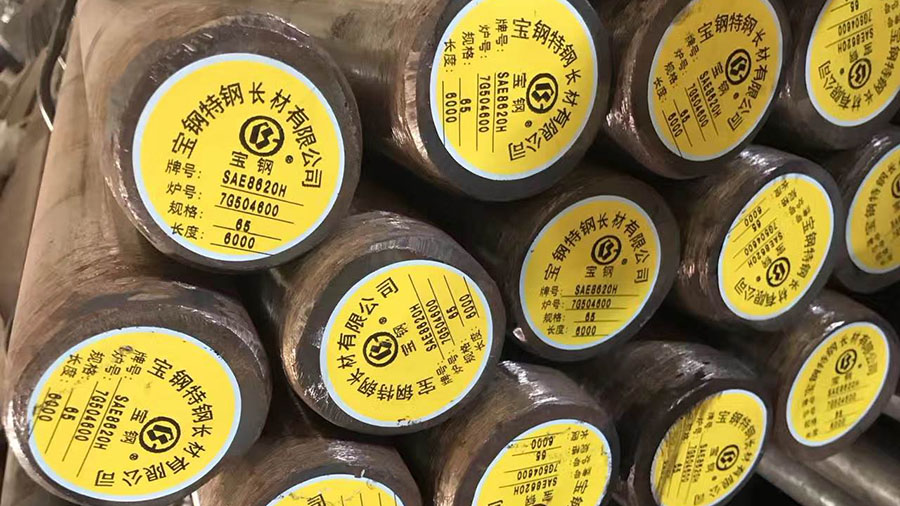
AISI SAE 8620 Steel (UNS G86200)
AISI SAE 8620 steel is a commonly used low-alloy material for carburizing, with excellent carburizing response, good hardenability for most section sizes, it has many extensive applications due to its low cost, better machinability, and availability.
SAE AISI 8620 Steel Properties
The tables below summarize SAE AISI 8620 steel properties, and specification including chemical composition, mechanical properties, hardness, heat treatment, etc.
Chemical Composition
AISI SAE 8620 steel chemical composition is listed in the table below.
| SAE AISI 8620 Chemical Composition, % | ||||||||||||
| Standard | Steel Grade (UNS) | C | Si | Mn | P, ≤ | S, ≤ | Cr | Ni | Mo | Cu, ≤ | O, ≤ | Al, ≤ |
| ASTM A322; ASTM A29/A29M | 8620 (UNS G86200) | 0.18-0.23 | 0.15-0.35 | 0.70-0.90 | 0.035 | 0.040 | 0.40-0.60 | 0.40-0.70 | 0.15-0.25 | – | – | – |
| ASTM A534 | 8620H | 0.17-0.23 | 0.15-0.35 | 0.60-0.95 | 0.025 | 0.015 | 0.35-0.65 | 0.35-0.75 | 0.15-0.25 | 0.3 | 0.002 | 0.05 |
Mechanical Properties
AISI SAE 8620 material mechanical properties are listed in the following tables including yield strength (yield stress), tensile strength, impact strength and hardness, etc.
Notes:
- 1 MPa = 1 N/mm2
- 1 GPa = 1 kN/mm2
| 8620 alloy steel mechanical properties | |||||||
| Steel (UNS) | Tensile strength, Mpa (ksi), ≥ | Yield strength, Mpa (ksi), ≥ | Elongation in 50 mm (2 in.), %, ≥ | Reduction in area, %, ≥ | Hardness, HB | Izod impact strength, J (ft·lbf) | Condition or treatment |
| 8620 (UNS G86200) | 633 (92) | 357 (52) | 26.3 | 59.7 | 183 | 100 (74) | Normalized at 915 °C (1675 °F) |
| 536 (78) | 385 (56) | 31.3 | 62.1 | 149 | 115 (83) | Annealed at 870 °C (1600 °F) | |
Machinability ratings: 65% for cold-finished bars based on the machinability rating of 1212 steel of 100%, microstructure composed mainly of acicular pearlite and bainite. Brinell hardness: 179-235 HB.
Hardness
| Effect of mass on hardness of normalized 8620 alloy steel | |||
| Grade (UNS) | Normalizing temperature, °C (°F) | Bar with diameter, mm (in.) | Hardness, HB |
| 8620 (UNS G86200) | 915 (1675) | 13 (1/2) | 197 |
| 25 (1) | 183 | ||
| 50 (2) | 179 | ||
| 100(4) | 179 | ||
| Effect of mass on oil quenched hardness (HRC) of low-alloy 8620 steel of various diam bar. | ||||||||||||
| Alloy | 13 mm (0.5 in) | 25 mm (1 in.) | 50 mm (2 in.) | 100 mm (4 in.) | ||||||||
| Surface | 1/2 radius | Center | Surface | 1/2 radius | Center | Surface | 1/2 radius | Center | Surface | 1/2 radius | Center | |
| 8620, 8620H | 43 | 43 | 43 | 29 | 27 | 25 | 23 | 22 | 97 HRB | 22 | 95 HRB | 93 HRB |
Alloy 8620 Heat Treatment
| Approximate transformation temperatures of 8620 alloy steels | |||||
| Grade | Transformation temperature on heating at 28 °C/h (50 °F/h) | Transformation temperature on cooling at 28 °C/h (50 °F/h) | |||
| 8620 (UNS G86200) | Ac1 | Ac3 | Ar3 | Ar1 | Ms |
| 730 (1350) | 830 (1525) | 770 (1415) | 660 (1220) | 395 (745) | |
| Hardening temperatures for low-carbon, low-alloy 8620 steel after carburizing | |||
| SAE steels | Treatment | Temperature, °C (°F) | Note |
| 8620, 8615, 8617, 8622, 8625, 8720 | Carburizing | 900-955 (1650-1750) | |
| Reheat | 800-830 (1475-1525) | When case hardness only is paramount | |
| 830-855 (1525-1575) | When higher core hardness is desired | ||
| Tempering | 120-175 (250-350) | Optional (For partial stress relief and improved resistance to cracking from grinding operations.) | |
| Cooling medium: Oil | |||
| Austenitizing temperatures and quenching media for direct hardening 8620 low-alloy steel | |||
| AISI | Austenitizing temperature, °C (°F) | Quenching medium | Temper, °C (°F) |
| 8620 (UNS G86200) | 845 (1550) | Oil or Austenitize at 830 °C (1525 °F) for water quench | 200-650 (390-1200) |
| Full annealing cycles for 8620 alloy carburizing steel | |||||
| AISI | Conventional process | Isothermal process | |||
| Annealing temperature, °C (°F), Hold for 45 min | Cooling | Annealing temperature, °C (°F) | Isothermal temperature, °C (°F) | Hold, h | |
| 8620 | 870 (1600) | Furnace Cool | 885 (1625) | 660 (1220 ) | 4 |
| 8620 material usually do not require a full anneal. Normalizing or an isothermal treatment will provide the best structures for machining. | |||||
| Important carburizing parameters for some of 8620 gear steel grade | ||
| AISI | Heat Treatment | Temperature, °C (°F) |
| 8620 | Normalizing | 870-930 (1600-1700) |
| Annealing | 860 (1575) | |
| Carburizing | 930 (1700) | |
| Reheat | 775-840 (1425-1550) | |
| Ms | 395 (745) | |
| Typical heat treatment for carburizing of 8620 alloy steel | ||||
| AISI | Normalize | Carburizing temperature, °C (°F) | Cooling method | Tempering temperature, °C (°F) |
| 8620 steel | Should be at least as high as the carburizing temperature followed by air cooling | 900-925 (1650-1700) | Quench in Oil | 120-175 (250-350) |
| Note: Carburizing: The usual practice is to reduce the carburizing temperature to approximately 845°C (1550°F) before quenching to minimize deformation and retain austenite. Tempering: Optional. Tempering is usually used to relieve some of the stress and improve the crack resistance of the grinding operation. In some application cases, use a temperature higher than the indicated temperature. | ||||
| Typical applications of 8620 martempering steel parts in salt | |||||
| Part | Grade | Maximum section thickness, mm (in.) | Weight, kg (lb) | Martempering conditions | |
| Temperature of salt, °C (°F) | Minimum time in salt, min | ||||
| Screw-machine spindle | 8620 Carburized | 10.2 (0.40) | 6.35 (14.0) | 205 (400) | 3 |
| Screw-machine sprocket | 38.1 (1.50) | 9.07 (20.0) | 205 (400) | 3 | |
| Typical applications of martempering 8620 steel parts in oil | |||||||||
| Part | Grade | Maximum section thickness, mm (in) | Outside diameter, mm (in) | Weight, kg (lb) | Carburizing temperature, °C (°F) | Depth of case, μm (0.001 in) | Quenching temperature, °C (°F) | Temperature of martempering oil, time in oil ≥5 min. | Surface hardness, HRC |
| Splined shaft | 8620 steel | 50.8 (2) | 50.8 (2) | 5.1 (11.25) | 925 (1700) | 1525-1725 (60-68) | 925 (1700) | 165 | 58-62 |
| 8625 steel | 44.4 (1.75) | 44.4 (1.75) | 2.0 (4.5) | 190 | 58-62 | ||||
| 65.0 (2.559) | 65.0 (2.559) | 6.8 (15) | 165 | 58-62 | |||||
| Typical applications of liquid carburizing in cyanide baths | ||||||||
| Material | Part | Weight, kg (lb) | Depth of case, mm (in.) | Temperature, °C (°F) | Time, h | Quench | Subsequent treatment | Rockwell hardness, HRC |
| 8620 steel | Bearing races | 0.9-36 (2-80) | 2.3 (0.090) | 925 (1700) | 14 | AC | ② | 61-64 |
| Bearing rollers | 0.20 (0.5) | 2.3 (0.090) | 925 (1700) | 14 | AC | ② | 61-64 | |
| Coupling | 0.03 (0.06) | 0.25-0.4 (0.010-0.015) | 845 (1550) | 2 | Oil | ① | File-hard | |
| Crankshaft | 0.9 (2) | 1.0 (0.040) | 915 (1675) | 6.5 | AC | ③ | 60-63 | |
| Gear | 0.34 (0.75) | 1.0 (0.040) | 915 (1675) | 6 | AC | ② | 60-63 | |
| 0.03 (0.06) | 0.075-0.13 (0.003-0.005) | 845 (1550) | 0.5 | Oil | ① | File-hard | ||
| Idler shaft | 0.45 (1) | 0.75 (0.030) | 915 (1675) | 5 | ④ | – | 58-63 | |
| Pintle | 4.5-86 (10-190) | 1.5 (0.060) | 925 (1700) | 12 | ④ | – | 58-63 | |
| Piston | 0.20 (0.5) | 1.3 (0.050) | 915 (1675) | 8 | AC | ② | 60-63 | |
| Plunger | 0.45-82 (1-180) | 1.3 (0.050) | 915 (1675) | 8 | ④ | – | 58-63 | |
| Ram | 2.3-23 (5-50) | 1.1 (0.045) | 915 (1675) | 7 | ④ | – | 58-63 | |
| Spool | 0.45-54 (1-120) | 1.3 (0.050) | 925 (1700) | 7 | ④ | – | 58-63 | |
| Thrust cup | 0.20 (0.5) | 1.1 (0.045) | 915 (1675) | 7 | ④ | – | 58-63 | |
| Thrust plate | 5.4 (12) | 2.3 (0.090) | 925 (1700) | 14 | AC | ② | 60-64 | |
| Universal socket | 1.8 (4) | 1.5 (0.060) | 915 (1675) | 10 | AC | ② | 58-63 | |
| Valve | 0.01 (0.03) | 0.4-0.5 (0.015-0.020) | 845 (1550) | 4 | Oil | ⑤ | ≥60 | |
| Valve seat | 0.20 (0.5) | 1.1 (0.045) | 915 (1675) | 7 | AC | ② | 60-63 | |
| Wear plate | 0.45-3.6 (1-8) | 1.3 (0.050) | 915 (1675) | 7 | AC | ② | 60-63 | |
Notes:
| ||||||||
| Typical applications of liquid carburizing in noncyanide baths | ||||||||
| Alloy | Part | Weight, kg (lb) | Depth of case, mm (in.) | Temperature, °C (°F) | Time, h | Quench | Subsequent treatment | Rockwell hardness, HRC |
| 4620, 8620 steel | Screw machine spindles | 0.8 (1.8) | 0.89 (0.035) | Preheat at 840 °C (1545 °F); carburize at 920 °C (1690 °F) | 6 | Molten salt, 205 °C (400 °F) | – | 60-63 |
Carburizing
A common carburizing method of AISI SAE 8620 steel is to heat up to 925 °C (1700 °F) at a potential of 0.9% C in a prepared carbon-containing atmosphere, hold for about 4 hours (to reach a depth of 1.3 mm [0.050 in]), and reduce the temperature to 845 °C (1555 °F). The carbon potential is close to eutectoid, maintaining a 1 h diffusion period, quenching in oil, and then tempering at 150°C (300 °F). If the hardness loss at higher tempering temperatures can be tolerated, a slightly higher tempering temperature can be used to increase toughness.
Carbonitriding
A typical SAE AISI 8620 material carbonitriding process involves heating to 845 °C (1555 °F) with 10% (volume) anhydrous ammonia in a carburizing atmosphere for 45 minutes, then quenching in oil to produce a 0.305 mm (0.012 in.) deep shell. The time and temperature can be adjusted to change the depth of the case. The temperature is usually between 790 and 900 °C (1455 to 1650 °F). After carbonitriding, it is recommended to temper at 150 to 260 °C (300 to 500 °F).
Applications
The applications of AISI SAE 8620 steel including: Differentials (automotive and off-highway), drives (industrial, tractor accessory), engines, equipment (off-highway, steel or paper mill, mining), starters. Gears, steering mechanism, gear box and transmission components for cars.
Carburized gears, pinions, shafts, differential rings, steering worms, engine crankshafts, spline shafts, chains, air drill parts, chuck jaws, oil well bit and reamer cutters, piston pins, pneumatic chucks, heavy-duty bolts, fasteners, and hand tools.
SAE AISI 8620 Equivalent Material
SAE AISI 8620 material equivalent to European EN (Germany DIN, British BSI, French NF…), ISO, Japanese JIS and Chinese GB standard (For reference).
| SAE AISI 8620 Equivalent Material | |||||||||
| US | China | Japan | European Union | ISO | |||||
| Standard | Grade (UNS) | Standard | Grade (UNS) | Standard | Grade | Standard | Steel name (Steel number) | Standard | Grade |
| AISI SAE; ASTM A322; ASTM A29/A29M | 8620 (UNS G86200) | GB/T 3077 | 20CrNiMo (A50202) | JIS G4053 | SNCM220 | ||||
Related material: 5160 Steel, SAE AISI 1080 Steel, AISI 1018 Steel, AISI 1045 Steel, AISI 1020 Steel, SAE AISI 52100 Steel
FOR MORE DETAIL CONTACT US AT :-
LADHANI METAL CORPORATION, MUMABAI, INDIA,
Source :- theworldmaterial dot com
