

FOR REQUIREMENT OF THIS GRADE OR FOR DETAIL CONTACT US AT :-
Introduction
SAE J403
steel bars are widely used carbon steel bars specified by the Society of
Automotive Engineers (SAE) for general engineering and automotive applications.
The SAE J403 standard defines the chemical composition requirements for carbon
steels used in bars, forgings, and mechanical components. These steels are
known for their versatility, good machinability, moderate strength, and
cost-effective performance.
Ladhani
Metal Corporation is a manufacturer, supplier, and stockist of SAE J403 steel
bars, supplying a wide range of carbon steel grades suitable for machining,
forging, and structural applications. SAE J403 steels are commonly used in
automotive components, machinery parts, fasteners, shafts, and general
engineering equipment.
The
specification mainly focuses on chemical composition limits for plain carbon
steels that can be supplied in various heat-treated conditions to meet specific
mechanical requirements.
Applicable Standard
Standard
Specification: SAE J403
Issuing Organization: SAE International
Title: Chemical Compositions of SAE Carbon Steels
SAE J403
establishes the chemical composition limits for a broad range of carbon steels
used in bars and other forms. It serves as a reference standard for many carbon
steel grades widely used in manufacturing industries.
The
specification does not directly define mechanical properties because these
depend on the manufacturing process, heat treatment, and product size.
Forms of Supply
SAE J403
steel bars are available in several product forms depending on industrial
requirements.
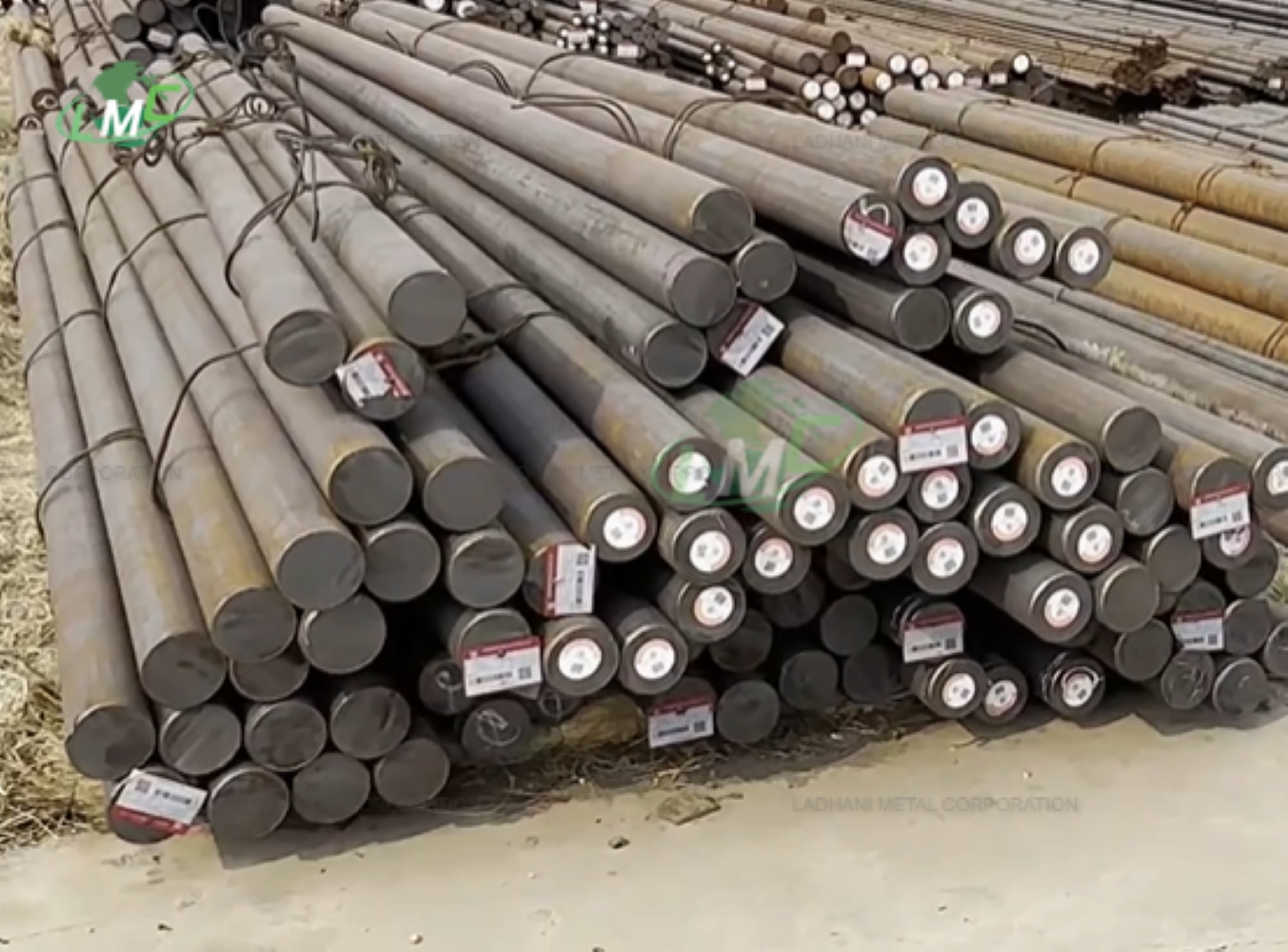
Round Bars
Square Bars
Flat Bars
Hexagonal Bars
Cold Drawn Bars
Hot Rolled Bars
Bright Bars
Typical supply conditions include:
Hot rolled
condition
Cold finished condition
Annealed condition
Normalized condition
Quenched and tempered condition
Standard supply lengths:
3 meters to
6 meters random lengths
Cut-to-length bars as per customer requirement
Surface finishes may include:
Black (mill
finish)
Peeled surface
Turned bars
Ground or polished finish
Common Grades Covered Under SAE J403
SAE J403
includes a wide range of plain carbon steel grades commonly used across industries.
Some frequently used grades include:
1006, 1008,
1010, 1015, 1018, 1020, 1022, 1025
1030, 1035, 1040, 1045, 1050, 1060, 1070
1080, 1090, 1095
These grades
differ primarily in carbon content, which directly influences strength,
hardness, and machinability.
Chemical Composition of Common SAE J403 Carbon Steel
Grades (%)
Table 1 –
Non-Resulfurized Carbon Steel Chemical Composition (SAE J403)
|
SAE No. |
Carbon (C %) |
Manganese (Mn %) |
Phosphorus (P) Max |
Sulfur (S) Max |
|
1005 |
0.06 Max |
0.35 Max |
0.030 |
0.050 |
|
1006 |
0.08 Max |
0.25–0.40 |
0.030 |
0.050 |
|
1008 |
0.10 Max |
0.30–0.50 |
0.030 |
0.050 |
|
1009 |
0.15 Max |
0.60 Max |
0.030 |
0.050 |
|
1010 |
0.08–0.13 |
0.30–0.60 |
0.030 |
0.050 |
|
1012 |
0.10–0.15 |
0.30–0.60 |
0.030 |
0.050 |
|
1013 |
0.11–0.16 |
0.30–0.60 |
0.030 |
0.050 |
|
1015 |
0.13–0.18 |
0.30–0.60 |
0.030 |
0.050 |
|
1016 |
0.13–0.18 |
0.60–0.90 |
0.030 |
0.050 |
|
1017 |
0.15–0.20 |
0.30–0.60 |
0.030 |
0.050 |
|
1018 |
0.15–0.20 |
0.60–0.90 |
0.030 |
0.050 |
|
1019 |
0.15–0.20 |
0.70–1.00 |
0.030 |
0.050 |
|
1020 |
0.18–0.23 |
0.30–0.60 |
0.030 |
0.050 |
|
1021 |
0.18–0.23 |
0.60–0.90 |
0.030 |
0.050 |
|
1022 |
0.18–0.23 |
0.70–1.00 |
0.030 |
0.050 |
|
1023 |
0.20–0.25 |
0.30–0.60 |
0.030 |
0.050 |
|
1025 |
0.22–0.28 |
0.30–0.60 |
0.030 |
0.050 |
|
1026 |
0.22–0.28 |
0.60–0.90 |
0.030 |
0.050 |
|
1029 |
0.25–0.31 |
0.60–0.90 |
0.030 |
0.050 |
|
1030 |
0.28–0.34 |
0.60–0.90 |
0.030 |
0.050 |
|
1033 |
0.30–0.36 |
0.70–1.00 |
0.030 |
0.050 |
|
1035 |
0.32–0.38 |
0.60–0.90 |
0.030 |
0.050 |
|
1037 |
0.32–0.38 |
0.70–1.00 |
0.030 |
0.050 |
|
1038 |
0.35–0.42 |
0.60–0.90 |
0.030 |
0.050 |
|
1039 |
0.37–0.44 |
0.70–1.00 |
0.030 |
0.050 |
|
1040 |
0.37–0.44 |
0.60–0.90 |
0.030 |
0.050 |
|
1042 |
0.40–0.47 |
0.60–0.90 |
0.030 |
0.050 |
|
1043 |
0.40–0.47 |
0.70–1.00 |
0.030 |
0.050 |
|
1044 |
0.43–0.50 |
0.30–0.60 |
0.030 |
0.050 |
|
1045 |
0.43–0.50 |
0.60–0.90 |
0.030 |
0.050 |
|
1046 |
0.43–0.50 |
0.70–1.00 |
0.030 |
0.050 |
|
1049 |
0.46–0.53 |
0.60–0.90 |
0.030 |
0.050 |
|
1050 |
0.48–0.55 |
0.60–0.90 |
0.030 |
0.050 |
|
1053 |
0.48–0.55 |
0.70–1.00 |
0.030 |
0.050 |
|
1055 |
0.50–0.60 |
0.60–0.90 |
0.030 |
0.050 |
|
1060 |
0.55–0.65 |
0.60–0.90 |
0.030 |
0.050 |
|
1065 |
0.60–0.70 |
0.60–0.90 |
0.030 |
0.050 |
|
1070 |
0.65–0.75 |
0.60–0.90 |
0.030 |
0.050 |
|
1074 |
0.70–0.80 |
0.50–0.80 |
0.030 |
0.050 |
|
1075 |
0.70–0.80 |
0.40–0.70 |
0.030 |
0.050 |
|
1078 |
0.72–0.85 |
0.30–0.60 |
0.030 |
0.050 |
|
1080 |
0.75–0.88 |
0.60–0.90 |
0.030 |
0.050 |
|
1084 |
0.80–0.93 |
0.60–0.90 |
0.030 |
0.050 |
|
1085 |
0.80–0.93 |
0.70–1.00 |
0.030 |
0.050 |
|
1086 |
0.80–0.93 |
0.30–0.50 |
0.030 |
0.050 |
|
1090 |
0.85–0.98 |
0.60–0.90 |
0.030 |
0.050 |
|
1095 |
0.90–1.03 |
0.30–0.50 |
0.030 |
0.050 |
Table 2 –
High Manganese Carbon Steel Compositions (SAE J403)
|
SAE No. |
Carbon (C %) |
Manganese (Mn %) |
Phosphorus (P) Max |
Sulfur (S) Max |
|
1522 |
0.18–0.24 |
1.10–1.40 |
0.030 |
0.050 |
|
1524 |
0.19–0.25 |
1.35–1.65 |
0.030 |
0.050 |
|
1526 |
0.22–0.29 |
1.10–1.40 |
0.030 |
0.050 |
|
1527 |
0.22–0.29 |
1.20–1.50 |
0.030 |
0.050 |
|
1536 |
0.30–0.37 |
1.20–1.50 |
0.030 |
0.050 |
|
1541 |
0.36–0.44 |
1.35–1.65 |
0.030 |
0.050 |
|
1547 |
0.43–0.51 |
1.35–1.65 |
0.030 |
0.050 |
|
1548 |
0.44–0.52 |
1.10–1.40 |
0.030 |
0.050 |
|
1552 |
0.47–0.55 |
1.20–1.50 |
0.030 |
0.050 |
|
1566 |
0.60–0.71 |
0.85–1.15 |
0.030 |
0.050 |
Notes
1. Phosphorus and Sulfur Limits
Certain qualities and commodities are customarily produced to lower
phosphorus and sulfur limits than those listed in the table.
Reference may be made to SAE J411 Table 1 for additional guidance.
2. Lead (Pb)
Standard carbon steels may be produced with a lead content of 0.15% to 0.35%
to improve machinability.
Such steels are designated by inserting the letter “L” between the second and third numerals of the SAE grade number.
Example:
1045 → 10L45
3. Boron (B)
Standard killed
carbon steels (fine grain) may contain boron
additions ranging from 0.0005% to 0.003% to improve
hardenability.
These steels are identified by inserting the letter “B” between the second and third numerals of the SAE grade number.
Example:
1046 → 10B46
4. Copper (Cu)
When copper is required, a minimum copper content of 0.20% is generally specified.
5. Manganese (Mn) – Special Case
For SAE
1006 and SAE 1008, when applicable to structural
shapes, plates, strip, sheets, and welded tubing, the manganese
limits are:
SAE 1006: 0.45% maximum (no minimum)
SAE 1008: 0.50% maximum (no minimum)
6. Silicon (Si) – Bars and Semifinished Products
When silicon limits are required, the following ranges are commonly used:
0.10% max
0.10–0.20%
0.15–0.35%
0.20–0.40%
0.30–0.60%
7. Silicon (Si) – Wire Rods
For non-resulfurized steels used in rods, the commonly specified silicon ranges
are:
0.10% max
0.07–0.15%
0.10–0.20%
0.15–0.35%
0.20–0.40%
0.30–0.60%
Mechanical Properties of SAE J403 Steel Bars
Mechanical
properties vary depending on grade and heat treatment condition. Typical values
are shown below.
|
Grade |
Tensile Strength (MPa) |
Yield Strength (MPa) |
Elongation (%) |
|
1018 |
440 – 470 |
370 |
15 – 20 |
|
1020 |
420 – 480 |
350 |
15 – 22 |
|
1045 |
565 – 700 |
310 – 530 |
12 – 16 |
|
1050 |
620 – 760 |
340 – 550 |
10 – 14 |
|
1095 |
750 – 950 |
420 – 620 |
8 – 12 |
Actual
mechanical properties depend heavily on heat treatment such as annealing,
normalizing, or quenching and tempering.
Key Features of SAE J403 Steel Bars
Good
machinability in low carbon grades
Wide availability of grades and sizes
Cost-effective engineering material
Good weldability in low carbon steels
Suitable for heat treatment in medium carbon grades
Reliable mechanical performance
Good formability and workability
These
characteristics make SAE J403 steels suitable for mass production components.
Heat Treatment
SAE J403
carbon steels respond well to conventional heat treatment processes.
Common heat
treatment processes include:
Annealing
Normalizing
Quenching and tempering
Carburizing (for low carbon grades)
Heat
treatment improves hardness, tensile strength, and wear resistance depending on
the carbon content.
Machinability
Low and
medium carbon grades such as 1018, 1020, and 1045 offer good machinability.
Free-cutting variants with higher sulfur content may be used for high-speed
machining operations.
Proper
cutting speeds, tooling, and coolant usage help achieve optimal machining
performance.
Industrial Applications of SAE J403 Steel Bars
SAE J403
steel bars are widely used in numerous industries due to their balanced
mechanical properties and easy machinability.
Automotive
Industry
Shafts
Axles
Gear blanks
Pins and fasteners
Steering components
General
Engineering
Machine
shafts
Bolts and studs
Mechanical linkages
Structural supports
Manufacturing
Industry
Industrial
equipment parts
Machined components
Machine tool parts
Construction
and Fabrication
Support
structures
Frames
Fabricated components
Tool and
Hardware Manufacturing
Hand tools
Springs (high carbon grades)
Cutting tools
The wide
variety of grades allows engineers to select the appropriate steel based on
strength, hardness, and ductility requirements.
Conclusion
SAE J403
steel bars are widely used carbon steels offering reliable mechanical
performance, good machinability, and versatility across many industrial
applications. The broad range of grades available under the SAE J403
specification allows manufacturers to select materials suitable for both
low-strength forming operations and high-strength mechanical components.
Ladhani
Metal Corporation supplies SAE J403 steel bars in multiple grades, sizes, and
supply conditions, ensuring consistent quality and compliance with
international standards for various engineering and industrial applications.
FOR REQUIREMENT OF THIS GRADE OR FOR DETAIL CONTACT US AT :-
#SAEJ403 #SAEJ403Steel #SAEJ403CarbonSteel #SAEJ403Bars #CarbonSteelBars #CarbonSteelBarSupplier #CarbonSteelManufacturer #EngineeringSteel #CarbonSteelGrades #SteelBars #AlloySteelBars #IndustrialSteel #ForgingSteel #HotRolledSteelBars #ColdFinishedSteelBars #SteelBarStockist #SteelBarSupplier #SteelIndustry #MetalIndustry #IndustrialMaterials #SteelProducts #MechanicalSteel #SteelForForging #SteelForMachining #AutomotiveSteel #ConstructionSteel #ManufacturingMaterials #SAEStandards #SteelSpecifications #SteelGrades #CarbonSteelProducts #BarStockist #SteelDistributors #EngineeringMaterials #IndustrialApplications #SteelSolutions #HighQualitySteel #PrecisionSteelBars #SteelProcessing #SteelManufacturing #MaterialEngineering #SteelComponents #MetalProducts #SteelSupply #SteelExporters #IndustrialSupply #SteelMarket #MetalEngineering #BarMaterials #SteelTechnology
