
Introduction
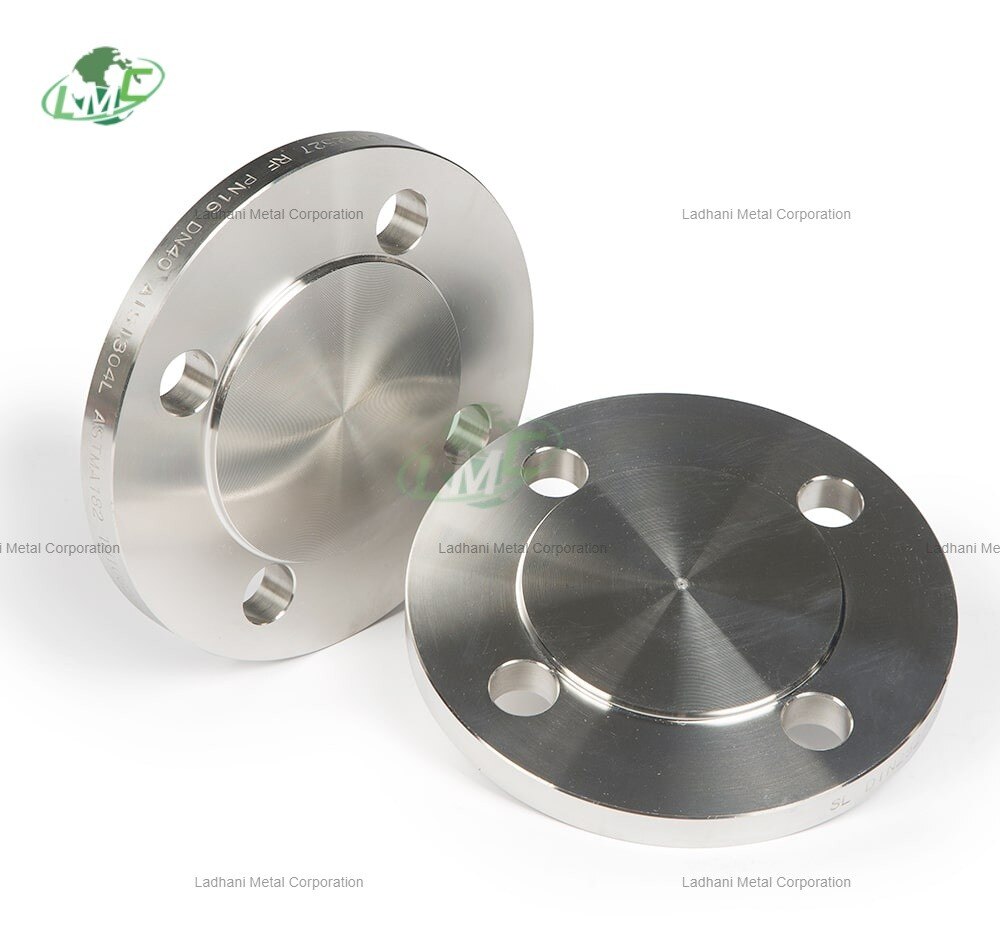
Flanges are essential components in piping systems, providing a secure means of joining pipes, valves, and other equipment. Blind flanges, in particular, are used to seal the ends of piping systems, preventing flow through a pipe. They are solid and feature no internal bore, effectively blocking off fluid transmission and allowing for maintenance or future system expansion. Inconel and Monel are two commonly used materials for manufacturing these flanges due to their remarkable resistance to extreme temperatures, pressure, and corrosive environments. These blind flanges are typically available in multiple pressure ratings (PN 10, PN 16, PN 25, and PN 40), allowing for their use in a variety of piping systems with different pressure requirements. By adhering to the DIN 2527 standard, these flanges provide reliability, durability, and effective sealing solutions in some of the most demanding operational environments.
Ladhani
Metal Corporation
offers reliable, high-performance blind flanges designed to provide secure,
leak-proof seals for piping systems in industries such as aerospace, chemical
processing, marine, oil and gas, and power generation. Our products adhere to
the DIN 2527 standard, ensuring
optimal performance and longevity in the most demanding operational
environments.
Inconel Blind Flanges
Inconel
is a family of high-performance nickel-chromium alloys known for their
exceptional resistance to heat, oxidation, and corrosion, making them ideal for
use in extreme environments, especially those involving high temperatures and
pressures. Inconel alloys are widely used in aerospace, chemical processing,
and marine industries where exposure to high temperatures, corrosive chemicals,
and saltwater is common.
Chemical
Composition of Monel Alloys
The
chemical composition of Inconel alloys varies depending on the grade, but all
share a high percentage of nickel, making them resistant to oxidation and
high-temperature corrosion.
Inconel 600 (Alloy 600)
- Nickel
(Ni): 72-75%
- Chromium
(Cr): 14-17%
- Iron
(Fe): 6-10%
- Manganese
(Mn): 1.0%
- Silicon
(Si): 0.5%
- Carbon
(C): 0.15% max
- Sulphur
(S): 0.015% max
Inconel 625 (Alloy 625)
- Nickel
(Ni): 58-70%
- Chromium
(Cr): 20-23%
- Molybdenum
(Mo): 8-10%
- Iron
(Fe): 5% max
- Niobium
(Nb): 3.15-4.15%
- Titanium
(Ti): 0.4% max
- Aluminium
(Al): 0.4% max
Inconel 718 (Alloy 718)
- Nickel
(Ni): 50-55%
- Chromium
(Cr): 17-21%
- Iron
(Fe): 18-22%
- Molybdenum
(Mo): 2.8-3.3%
- Cobalt
(Co): 1.0% max
- Titanium
(Ti): 0.9-1.2%
- Aluminum
(Al): 0.2-0.8%
These
chemical compositions ensure that Inconel alloys offer outstanding resistance
to high temperatures, oxidation, and corrosion, making them ideal for demanding
industrial applications.
Key Design Elements:
- Outer
Diameter (OD):
The overall diameter of the flange.
- Thickness
(t):
The flange thickness, which varies based on the pressure rating (PN).
- Bolt
Circle Diameter (BCD): The diameter of the circle formed by the
centers of the bolt holes.
- Bolt Holes: The number and
size of bolt holes depend on the flange's nominal diameter (DN) and
pressure rating.
- Pressure
Nominal (PN):
Specifies the maximum pressure the flange can handle. Common ratings
include PN 10, PN 16, PN 25, and PN 40.
- Material: Common materials for blind flanges include Inconel and Monel, chosen for their high resistance to temperature, corrosion, and pressure. Inconel alloys (600, 625, 718) and Monel alloys (400, K-500) are commonly used for high-performance applications.
Inconel Blind Flange
Applications
- Aerospace Industry: Inconel alloys,
particularly Inconel 718, are used in jet engines, turbine blades, and
exhaust systems due to their high-temperature strength and resistance to
pressure.
- Chemical Processing: Inconel 625 is preferred
for its ability to resist corrosion in aggressive chemical environments,
making it suitable for use in reactors and heat exchangers.
- Power Generation: The high-temperature
resistance of Inconel alloys makes them crucial for use in turbines and
nuclear reactors, where extreme heat and pressure are prevalent.
Monel Blind Flanges
Monel
alloys, primarily made from a combination of nickel and copper, offer
exceptional resistance to corrosion, particularly in marine and acidic
environments. These alloys are used widely in industries such as marine
engineering, petrochemical, and oil and gas, where resistance to seawater and
harsh chemicals is essential.
Chemical Composition of
Monel Alloys
Monel
alloys are composed of a significant amount of nickel, with copper as the
primary alloying element, and they also contain small quantities of other
metals like iron, manganese, and silicon.
Monel 400
- Nickel
(Ni): 63-70%
- Copper
(Cu): 28-34%
- Iron
(Fe): 2.5% max
- Manganese
(Mn): 2.0% max
- Silicon
(Si): 0.5% max
- Carbon
(C): 0.3% max
- Sulfur
(S): 0.024% max
Monel K-500
- Nickel
(Ni): 63-70%
- Copper
(Cu): 27-33%
- Iron
(Fe): 2.5% max
- Manganese
(Mn): 2.0% max
- Titanium
(Ti): 2.3-3.15%
- Aluminum
(Al): 0.35-0.45%
- Carbon
(C): 0.3% max
Monel
alloys, especially Monel 400
and Monel K-500, are known for their
ability to resist corrosion in seawater and acidic conditions, making them a
top choice for marine and chemical processing applications.
Monel
Blind Flange Applications
- Marine
Engineering:
Monel 400 is widely used in seawater applications due to its excellent
resistance to corrosion in salty and aqueous environments.
- Chemical
Processing:
Monel alloys are resistant to acids and alkalis, making them ideal for use
in pumps, valves, and heat exchangers.
- Oil and
Gas:
Monel alloys are widely used in offshore platforms and rigs due to their
resistance to the corrosive effects of seawater and oil.
PN Rating for Inconel
and Monel Blind Flanges
The
PN Rating (Pressure Nominal)
classifies the pressure tolerance of a flange and indicates the maximum
pressure that the flange can handle at a given temperature. This rating is
crucial for selecting the appropriate flange for a specific application. Below
is the table outlining the pressure tolerance for Inconel and Monel blind
flanges:
|
PN Rating |
Pressure (bar) at 20°C |
Pressure (MPa) |
|
PN 10 |
10 bar |
1.0 MPa |
|
PN 16 |
16 bar |
1.6 MPa |
|
PN 25 |
25 bar |
2.5 MPa |
|
PN 40 |
40 bar |
4.0 MPa |
- PN 10:
Suitable for lower-pressure applications.
- PN 16:
Commonly used for moderate-pressure applications.
- PN 25:
Ideal for higher-pressure systems.
- PN 40:
For applications requiring very high pressure.
Conclusion
Inconel and Monel blind flanges are vital components in industrial applications requiring resistance to extreme environments such as high temperatures, pressure, and corrosive conditions. Both alloys offer superior strength, corrosion resistance, and high-performance capabilities, making them ideal for use in industries like aerospace, chemical processing, marine engineering, and power generation.
FOR REQUIREMENT OF THIS GRADE OR FOR DETAIL CONTACT
US AT :-
Product Link: