
Introduction
Flanges are essential components used to connect pipes, valves, pumps, and other equipment to form a piping system. They provide easy access for cleaning, inspection, modification, or repairs. Flanges are typically joined to pipes through welding, bolting, or threading, ensuring a secure, leak-proof seal.
Weld neck flanges are critical components in piping systems designed for high pressure, high temperature, and severe service conditions. These flanges conform to DIN (Deutsches Institut für Normung) standards and are widely used across industries such as oil & gas, petrochemicals, power plants, and shipbuilding.
There are several types of flanges, each suited for specific applications:
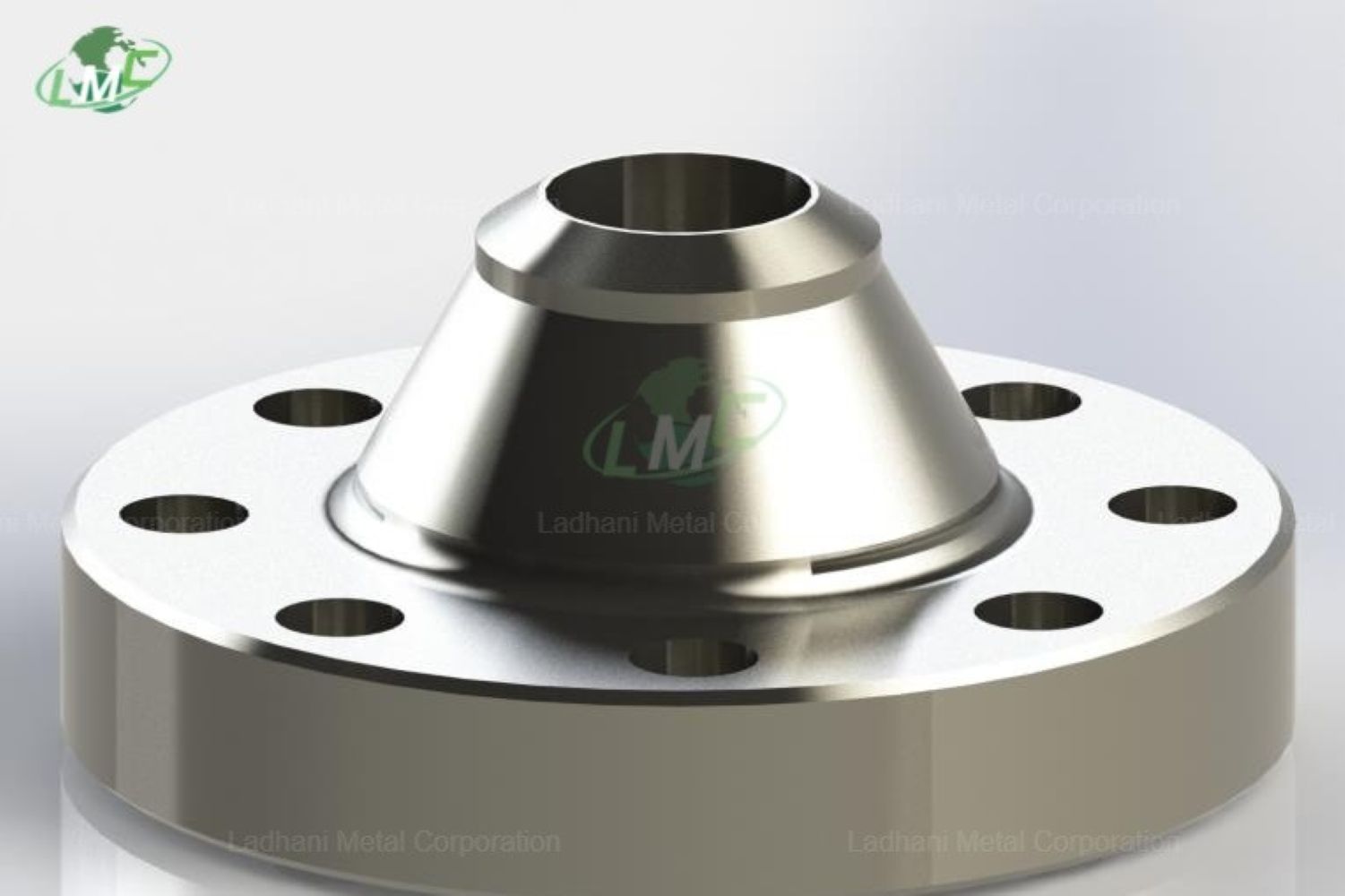
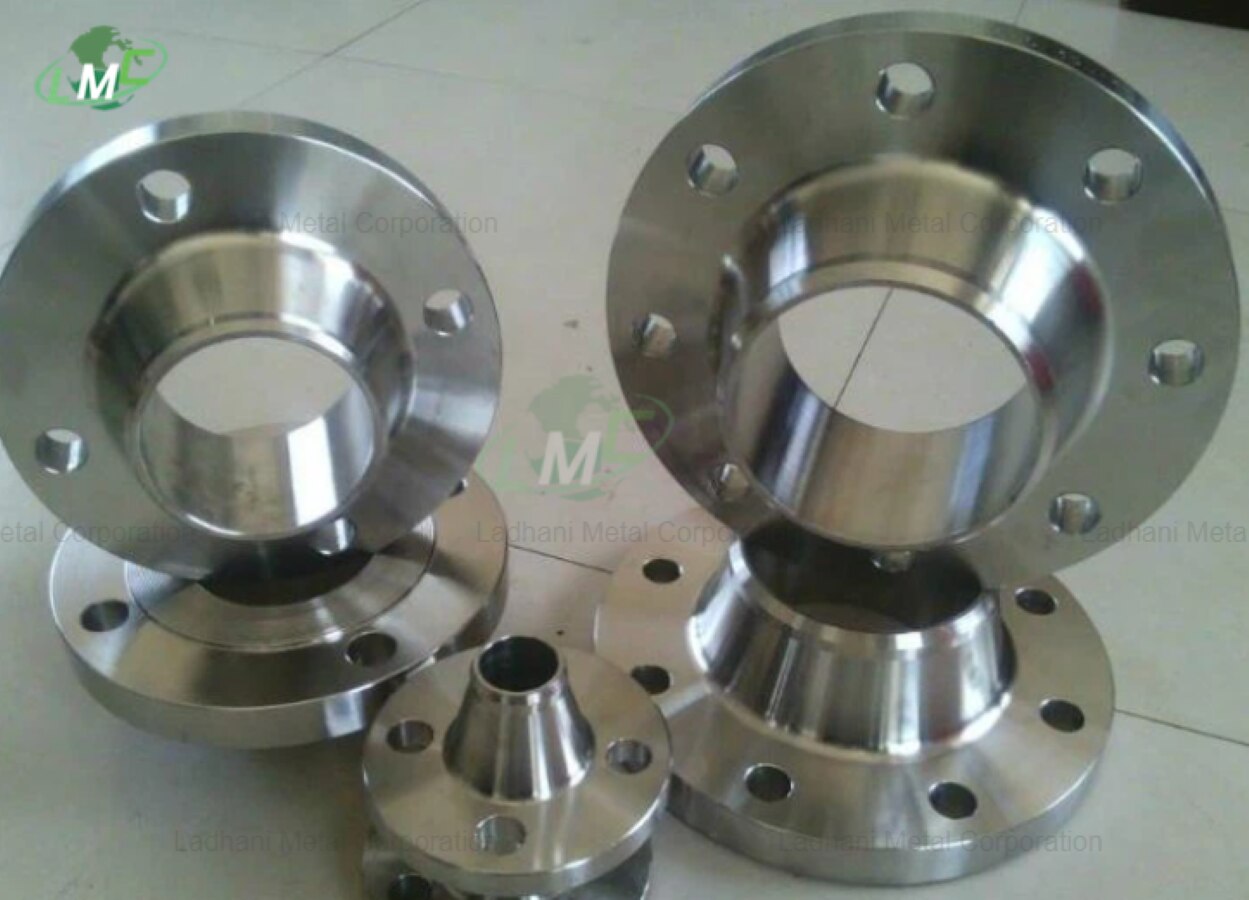
· Weld Neck Flanges: Characterized by a long tapered hub, they are butt-welded to pipes and designed to handle high pressure and temperature, making them ideal for critical systems.
· Slip-On Flanges: Simply slipped over the pipe and welded both inside and outside, suited for low-pressure applications.
· Blind Flanges: Used to close off the ends of piping systems.
· Socket Weld Flanges: Pipes are inserted into the flange and welded around the joint, suitable for small-diameter, high-pressure systems.
· Threaded Flanges: Connected by screwing onto threaded pipes, used where welding is unsafe.
· Lap Joint Flanges: Used with a stub end, easy to assemble and disassemble, mainly in low-pressure applications.
📘 What is a Weld Neck Flange?
A Weld Neck Flange (WN) is a flange with a long tapered hub that is butt-welded to a pipe. This smooth transition from flange to pipe provides:
· Excellent stress distribution,
· High fatigue resistance,
· Long service life,
· Reliable sealing under pressure and thermal stress.
🔩 DIN Flange Standards Overview
PN Rating refers to the nominal pressure rating of a flange, indicating the maximum pressure (in bars) it can withstand at a specific temperature, typically 20°C. For example, PN16 means the flange can safely operate at 16 bar pressure. The DIN standards specify weld neck flanges across various PN ratings such as PN2.5, PN10, PN16, PN25, PN250, and PN400, representing progressively higher pressure capabilities.
DIN Standard | PN (Nominal Pressure) | Max Pressure (bar) | Application |
DIN 2627 | PN 400 | 400 bar | Ultra high-pressure systems |
DIN 2628 | PN 250 | 250 bar | High-pressure piping |
DIN 2630 | PN 2.5 | 2.5 bar | Low-pressure, water lines |
DIN 2632 | PN 10 | 10 bar | General purpose, moderate pressure |
DIN 2633 | PN 16 | 16 bar | Industrial pipelines, HVAC |
DIN 2634 | PN 25 | 25 bar | Oil, gas, steam, chemical systems |
🔬 Materials and Chemical Composition for DIN Weld Neck Flanges
Applicable Standards: DIN 2627 (PN 400), DIN 2628 (PN 250), DIN 2630 (PN 2.5), DIN 2632 (PN 10), DIN 2633 (PN 16), DIN 2634 (PN 25)
The material selection for DIN weld neck flanges depends on service pressure, temperature, and media conditions. Below is a formal description of commonly used materials along with their typical chemical compositions and applications.
1. Titanium
Grade 2 (Commercially Pure)
· Titanium (Ti): ≥ 98.9%
· Iron (Fe): ≤ 0.30%
· Oxygen (O): ≤ 0.25%
· Carbon (C), Nitrogen (N), Hydrogen (H): Trace amounts
Applications: Excellent corrosion resistance in seawater, chemical processing, and desalination plants.
Grade 5 (Ti-6Al-4V)
· Titanium (Ti): Balance
· Aluminum (Al): 5.5 – 6.75%
· Vanadium (V): 3.5 – 4.5%
· Iron (Fe): ≤ 0.40%
· Oxygen (O): ≤ 0.20%
Applications: High-strength applications including aerospace, medical implants, and aggressive chemical environments.
2. Stainless Steel
Grade 304 (UNS S30400)
· Chromium (Cr): 18.0 – 20.0%
· Nickel (Ni): 8.0 – 11.0%
· Carbon (C): ≤ 0.08%
· Manganese (Mn): ≤ 2.0%
· Silicon (Si): ≤ 0.75%
· Phosphorus (P): ≤ 0.045%
· Sulfur (S): ≤ 0.030%
Applications: Suitable for water treatment, food processing, and moderate corrosion environments.
Grade 316 (UNS S31600)
· Chromium (Cr): 16.0 – 18.0%
· Nickel (Ni): 10.0 – 14.0%
· Molybdenum (Mo): 2.0 – 3.0%
· Carbon (C): ≤ 0.08%
· Manganese (Mn): ≤ 2.0%
· Silicon (Si): ≤ 0.75%
· Phosphorus (P): ≤ 0.045%
· Sulfur (S): ≤ 0.030%
Applications: Commonly used in marine, chemical, and chloride-containing environments due to enhanced corrosion resistance.
Grade 321 (UNS S32100)
· Chromium (Cr): 17.0 – 19.0%
· Nickel (Ni): 9.0 – 12.0%
· Carbon (C): ≤ 0.08%
· Titanium (Ti): Stabilizing element
· Manganese (Mn): ≤ 2.0%
· Silicon (Si): ≤ 0.75%
· Phosphorus (P): ≤ 0.045%
· Sulfur (S): ≤ 0.030%
Applications: Preferred in high-temperature environments where stabilization against carbide precipitation is needed.
3. Carbon Steel
ASTM A105 / DIN C22.8
· Carbon (C): ≤ 0.35%
· Manganese (Mn): 0.60 – 1.05%
· Silicon (Si): 0.15 – 0.35%
· Phosphorus (P): ≤ 0.035%
· Sulfur (S): ≤ 0.040%
· Iron (Fe): Balance
Applications: Widely used in general-purpose high-pressure piping systems including oil, gas, steam, and petrochemical industries where corrosion resistance is not a critical factor.
4. Inconel (Nickel-Based Alloys)
Inconel 600
· Nickel (Ni): ≥ 72%
· Chromium (Cr): 14 – 17%
· Iron (Fe): 6 – 10%
· Carbon (C), Manganese (Mn), Silicon (Si): Minor quantities
Applications: Heat-resistant and corrosion-resistant components in chemical processing and aerospace.
Inconel 625
· Nickel (Ni): ≥ 58%
· Chromium (Cr): 20 – 23%
· Molybdenum (Mo): 8 – 10%
· Iron (Fe): ≤ 5%
· Niobium (Nb): 3.15 – 4.15%
Applications: Used in aggressive chemical, seawater, and high-temperature applications.
Inconel 718
· Nickel (Ni): 50 – 55%
· Chromium (Cr): 17 – 21%
· Molybdenum (Mo): 2.8 – 3.3%
· Iron (Fe): Balance
· Niobium (Nb) + Tantalum (Ta): 4.75 – 5.5%
Applications: High strength, creep resistance for aerospace engines and nuclear reactors.
5. Monel
Monel 400
· Nickel (Ni): ≥ 63%
· Copper (Cu): 28 – 34%
· Iron (Fe): ≤ 2.5%
· Manganese (Mn), Silicon (Si): Minor
Applications: Marine and chemical environments requiring high resistance to seawater corrosion.
Monel K500
· Nickel (Ni): ~63%
· Copper (Cu): 27 – 33%
· Aluminum (Al): 2.3 – 3.15%
· Titanium (Ti): 0.35 – 0.85%
· Iron (Fe): ≤ 2%
Applications: High-strength variant of Monel 400, used in applications requiring enhanced mechanical properties.
6. Duplex Stainless Steel
Duplex 2205 (UNS S31803 / S32205)
· Chromium (Cr): 21 – 23%
· Nickel (Ni): 4.5 – 6.5%
· Molybdenum (Mo): 2.5 – 3.5%
· Nitrogen (N): 0.14 – 0.20%
· Iron (Fe): Balance
Applications: Suitable for highly corrosive environments such as chemical plants, offshore platforms, and pulp and paper industries.
7. Super Duplex 2507 (UNS S32750 / S32760)
· Chromium (Cr): 24.0 – 26.0%
· Nickel (Ni): 6.0 – 8.0%
· Molybdenum (Mo): 3.0 – 5.0%
· Nitrogen (N): 0.2 – 0.3%
· Iron (Fe): Balance
Applications: Used where exceptional strength, corrosion resistance, and resistance to chloride-induced stress corrosion cracking are critical, including offshore platforms, chemical plants, and desalination facilities.
🛠️ Detailed Applications of Weld Neck Flanges
Weld neck flanges are not just connectors; they are the backbone of safe, efficient, and durable piping systems across some of the most demanding industrial environments. Here’s a closer look at where and why these flanges truly shine:
1. High-Pressure Fluid and Gas Pipelines
· Why Weld Neck? These pipelines often transport oil, natural gas, and other hazardous fluids at extremely high pressures. The long tapered hub of weld neck flanges ensures excellent stress distribution at the weld joint, minimizing risks of failure.
· Industries: Oil & gas extraction, petrochemical refineries, natural gas distribution.
· Example: Offshore pipelines transporting natural gas from deep-sea wells to onshore processing plants demand weld neck flanges for their reliability under pressure fluctuations and corrosive environments.
2. Steam and Power Generation Systems
· Why Weld Neck? Power plants operate at high temperatures and pressures. Weld neck flanges provide robust mechanical strength and withstand thermal expansion without leakage.
· Industries: Thermal power plants, nuclear power plants, geothermal plants.
· Example: In steam boilers and turbines, weld neck flanges facilitate safe connection of pipes carrying superheated steam, ensuring energy efficiency and operational safety.
3. Chemical Processing Plants
· Why Weld Neck? Chemicals can be highly corrosive, and plants often run under high pressure and temperature conditions. Using corrosion-resistant materials like duplex stainless steel or Inconel with weld neck flanges ensures long-term durability.
· Industries: Chemical manufacturing, pharmaceuticals, fertilizer production.
· Example: Pipelines carrying aggressive acids or solvents in chemical reactors are fitted with weld neck flanges made from super duplex stainless steel to resist corrosion and cracking.
4. Offshore Platforms and Refineries
· Why Weld Neck? The harsh marine environment with saltwater, waves, and fluctuating pressures requires flanges that offer exceptional corrosion resistance and mechanical reliability.
· Industries: Offshore oil rigs, LNG terminals, marine engineering.
· Example: Offshore platform piping systems exposed to seawater and high-pressure hydrocarbon fluids utilize titanium or Monel weld neck flanges for their unparalleled resistance to saltwater corrosion.
5. Cryogenic and High-Temperature Services
· Why Weld Neck? Extreme temperatures, whether ultra-low in cryogenic applications or very high in furnaces, demand flanges that maintain integrity without brittleness or deformation.
· Industries: LNG storage and transport, aerospace, metallurgy.
· Example: Storage tanks and pipelines carrying liquefied natural gas (LNG) use stainless steel or special alloy weld neck flanges that maintain ductility and strength at temperatures as low as -196°C.
🎯 Why Are Weld Neck Flanges the Preferred Choice?
- Leak-Proof Under Cyclic Loading: The tapered hub and smooth transition between pipe and flange reduce stress concentrations, preventing cracks under pressure fluctuations.
- Smooth Fluid Flow Transition: The design avoids turbulence and pressure drop, preserving pipeline efficiency.
- Outstanding Mechanical Strength: Suitable for harsh conditions—high pressure, high temperature, and corrosive media.
- Ease of Inspection & Maintenance: Bolted connection allows for easy disassembly without damaging pipes.
✅ Conclusion
Weld neck flanges as per DIN 2627 to DIN 2634 are designed for reliable performance under different pressure classes (PN 2.5 to PN 400). The right selection of material based on pressure, temperature, and media ensures long-term integrity of the piping system.
For high-quality DIN-compliant weld neck flanges with guaranteed material traceability and manufacturing excellence, Ladhani Metal Corporation stands as a trusted supplier in the industry. Contact Ladhani Metal Corporation
📞 Get in Touch with Ladhani Metal Corporation
For premium-grade weld neck flanges, material traceability, and expert support, contact Ladhani Metal Corporation—your trusted partner in piping solutions.
· Email: info@ladhanimetals.com
· Website: https://www.ladhanimetal.in/
https://www.ladhanimetal.com/
Product Links: